Cal Poly Pomona Student Services Building

Pomona, California

Project Quick Facts


Building Client
California State Polytechnic University, Pomona

General Contractor
C.W. Driver

Software Used
RISA-3D

Structural Components
Steel Framing

Year Completed
2018


Project Background

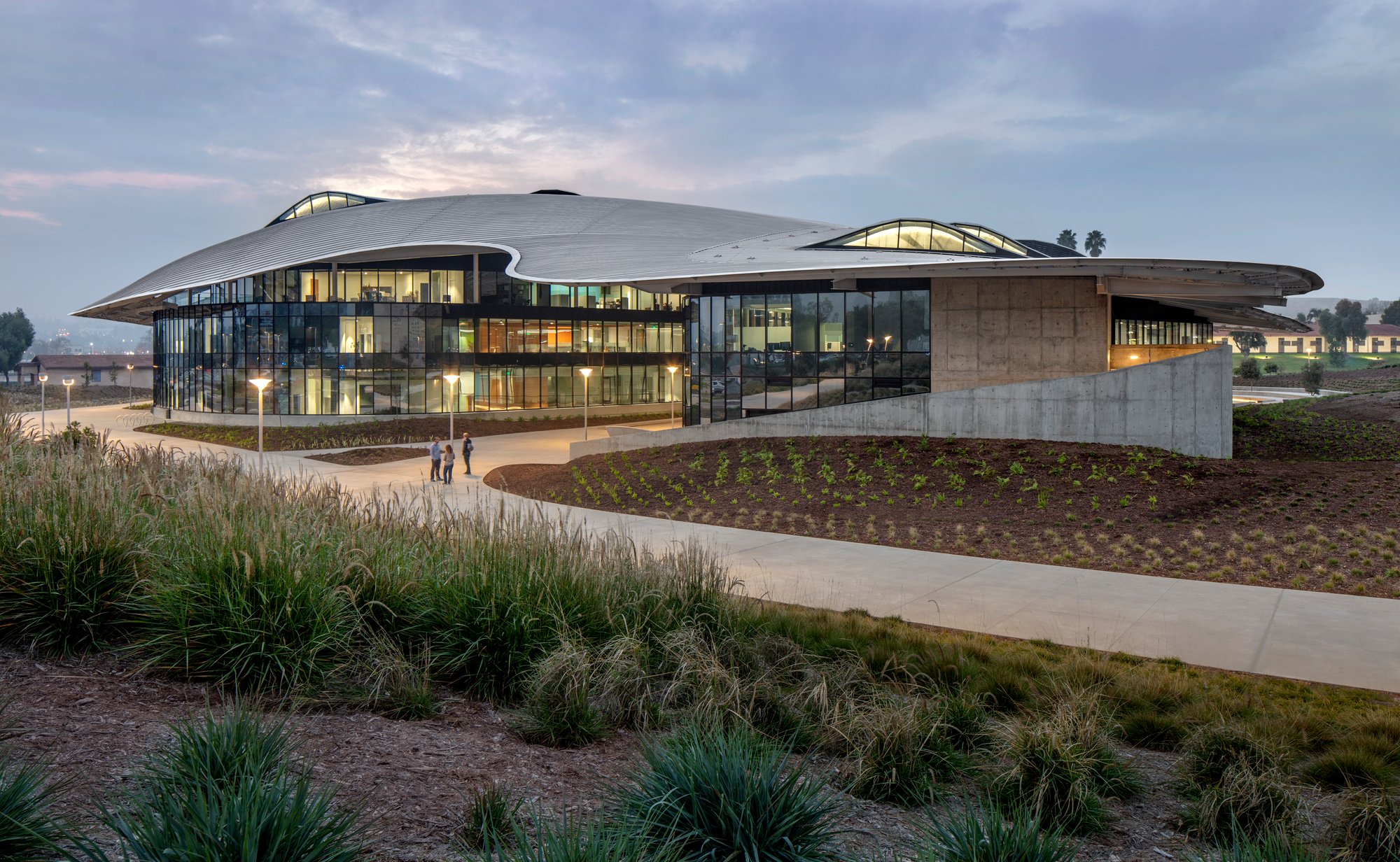
Serving prospective students as well as students looking to register for classes or apply for financial aid, the Student Services Building stands as a symbol for the aspirations and the sustainable-focused mission of the university. Inspired by the surrounding topography of the campus, the nearby San Gabriel Mountains, the undulating roof serves an essential role in achieving LEED Platinum certification. Spanning over two separate structures, the roof mitigates the desert climate with it’s perforated overhangs, shading the exterior glass, reducing the thermal loads and glare.

2
connected

structures

40
ft

roof span

3
story

height

parallax image
IMG_6476

About the Structure

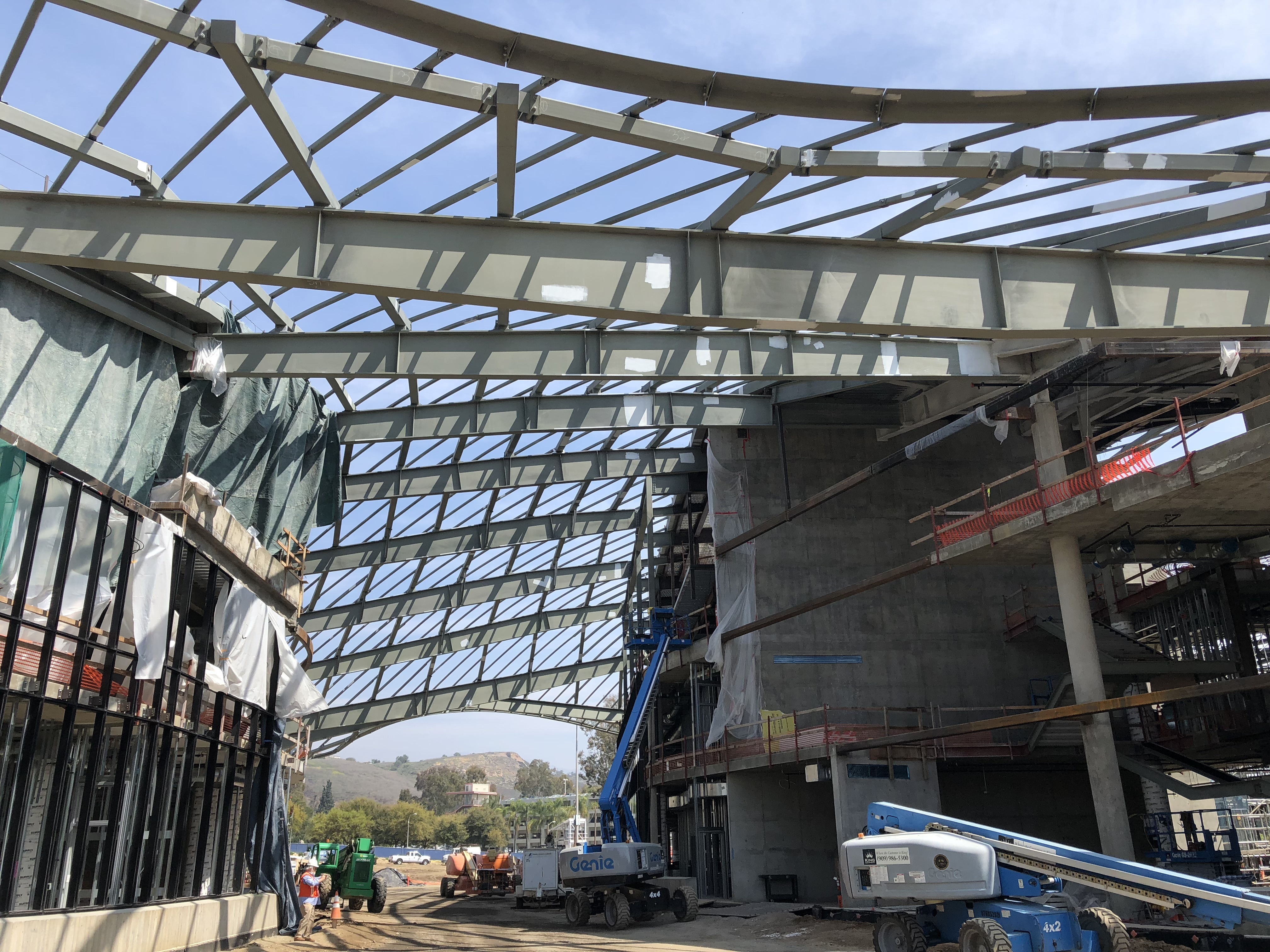
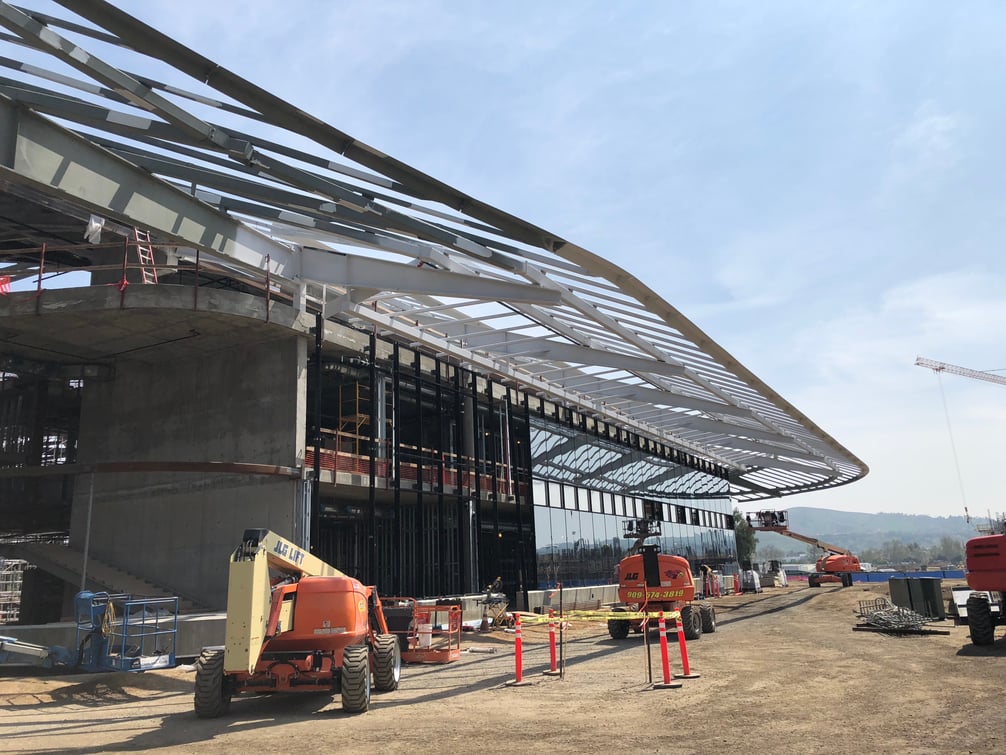
Two separate structures, constructed of elevated concrete slabs and lateral load resisting concrete shear walls, are joined by a streamlined, undulating roof. A broad and open breezeway separates the main, three-story building from the two-story wing. As the main focal point of the structure, the organic, undulating roof consists of long-span tapered steel girders, supporting a Kalzip standing-seam roof. The Kalzip standing-seam roof is a two-way span and is curved in both directions which posed considerable challenges for the design, fabrication and installation of the steel girders, requiring them to meet incredibly strict deflection tolerances. As of result of the constantly changing roof geometry approximately 19,000 attachment clips were required to keep the roof panels in place.

What I always like RISA-3D for is the table based input and output data. When trying to manipulate so much [data] at one time and verify things, transparency is helpful.

Matt Timmers, Project Manager

parallax image

How Were RISA Products Utilized?

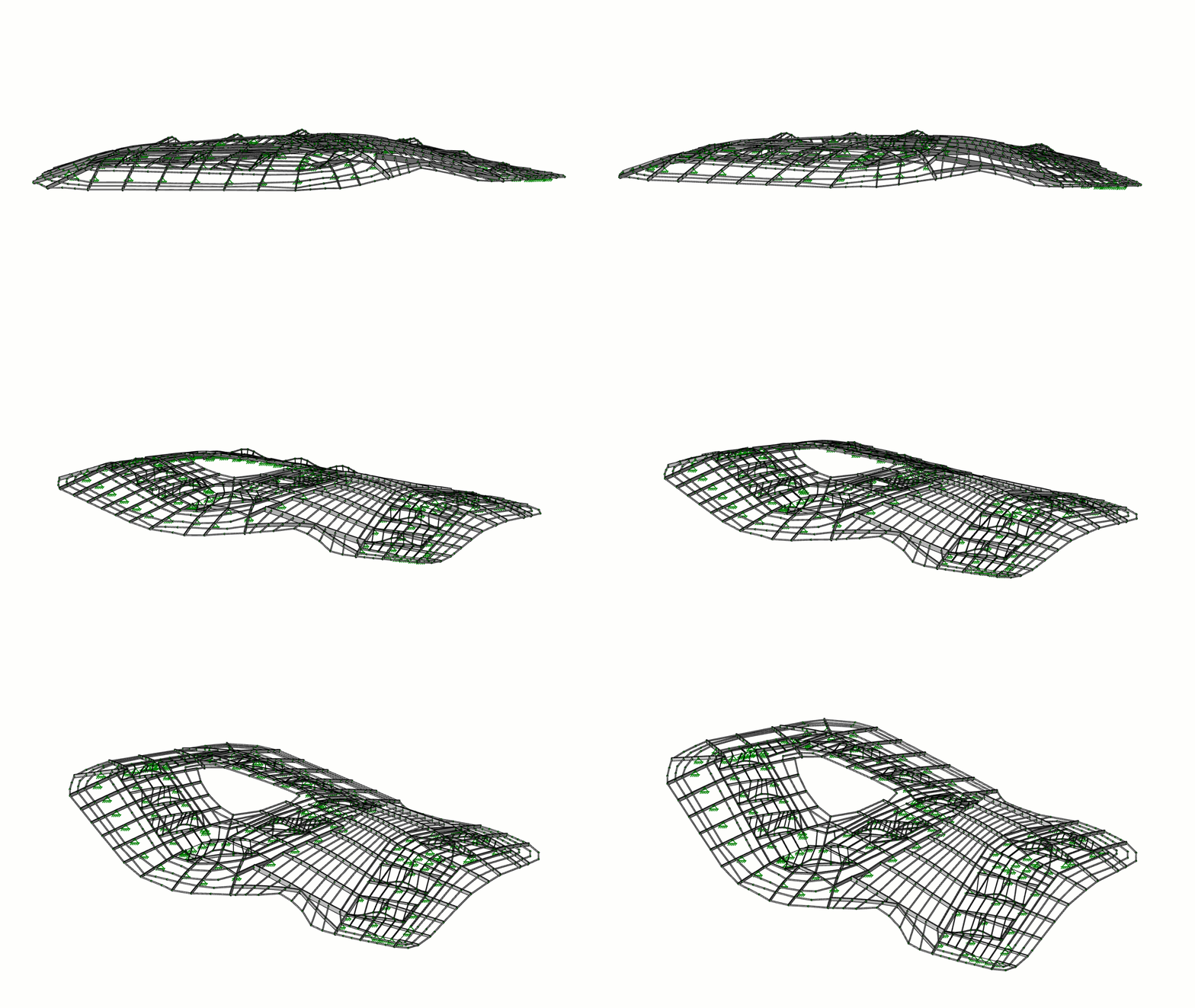
Parametric modeling techniques were used to generate the intricate and complex geometry of the steel roof structure. From there the structure was imported into BIM technology where a DXF file was generated in order to streamline the structural analysis and design in RISA-3D. Serving as the primary analytical software for the gravity design of the roof structure, RISA-3D enabled the designers to manipulate geometry and loading conditions with ease. Close monitoring of individual member deflections as well as global deflections under a variety of loading conditions was critical for successful fabrication and construction. Engineers were able to consider a variety of loading conditions easily by copying basic load cases and manipulating them by degrees of magnitude. Overall, RISA-3D was able to handle the complexity of this structure through data input manipulation, all while maintaining transparency in results.

Image 1: Timmerman Photography Inc | Image 2-4: John A. Martin & Associates

risa-icon-wht-1

Reach an Engineer

Connect with the Experts.
We have the engineering staff ready to assist you.