 By: Admin
Using Projected Loads in RISA-3D
RISA-3D, RISA-2D and RISAFloor have the capability to project distributed and area loads onto members. Consider the case of snow load on two...

Try the Complete RISA Suite for
10 Days FREE

RISA Education

Video Library

Online Help

Get Support

About Us
When you have a deep column, it is necessary to model the beam so that it connects to the face of the column. This results in an eccentricity at the joint. RISA-3D offers two ways to model this eccentricity.
Open the Members Spreadsheet and go to the Advanced tab. There are two options labeled I Offset and J Offset. These represent the offset at the start (I) and end (J) of the member, respectively.

You may also specify the I Offset and J Offset by first selecting the beam, and modifying the Additional Properties section of the Properties Grid.
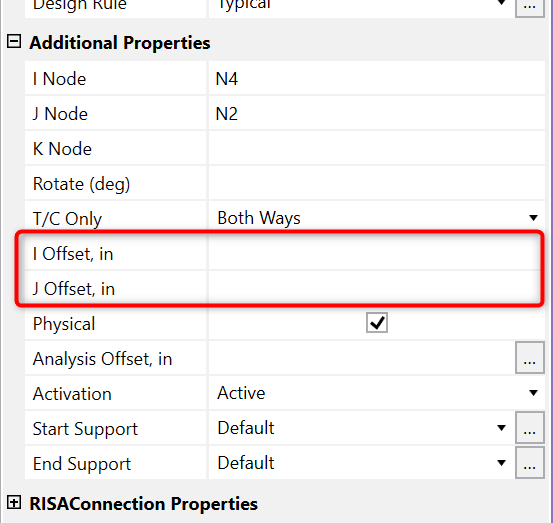
For the beam member you can either enter the exact value of the member offset (i.e. half the depth of the column) or you can enter the column member number. If you enter the column member number the program will automatically calculate the offset assuming half the column depth. This feature is very useful because it will automatically update the offset value when you change the column size.
Please note that using the offset feature will reduce the total length of your beam by the offset amounts which will affect your design code check calculation.
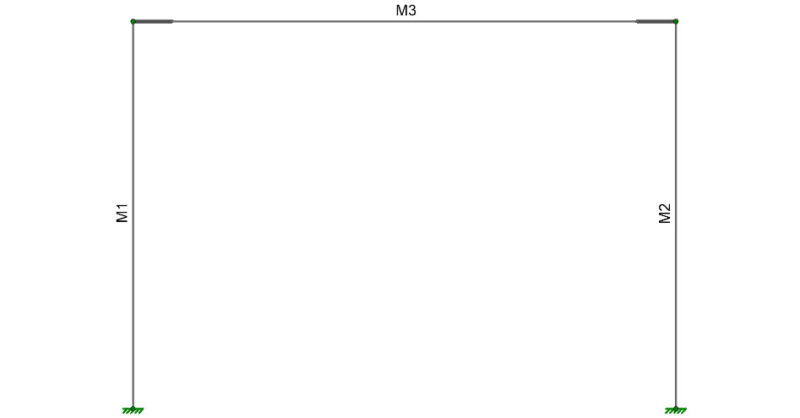
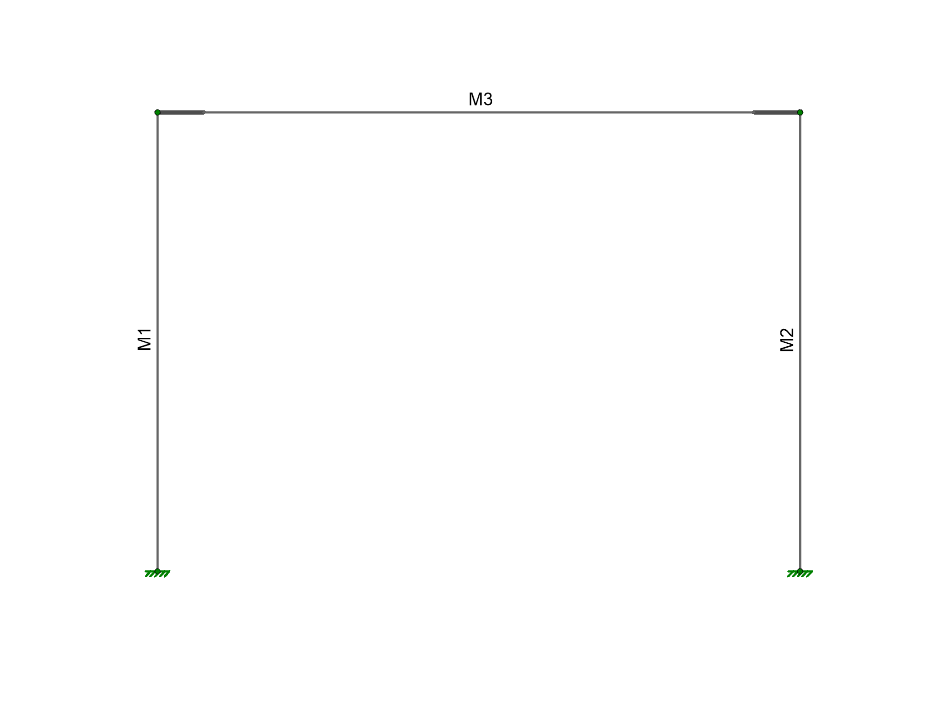
For example, in a portal frame model where M1 is the beam and M2 and M3 are 24 inch deep columns, there are two options for offsets that will produce the same results: 12 inches or M2.

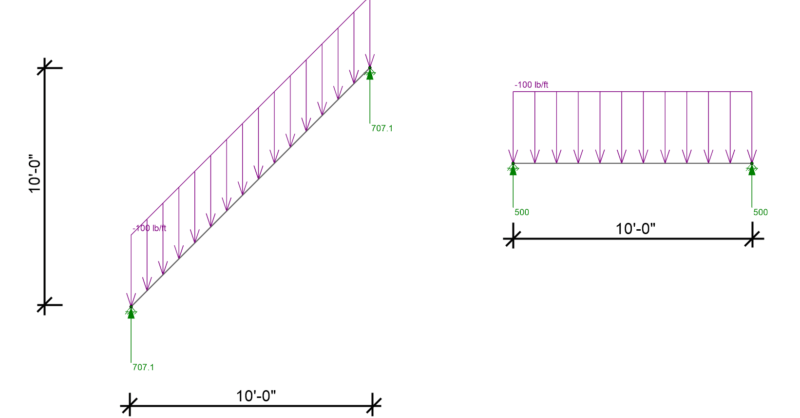
RISA-3D, RISA-2D and RISAFloor have the capability to project distributed and area loads onto members. Consider the case of snow load on two...

Investigating P-Delta instabilities in RISA-3D (or RISA-2D) can be difficult. The first step is usually to solve the model without the P-Delta...
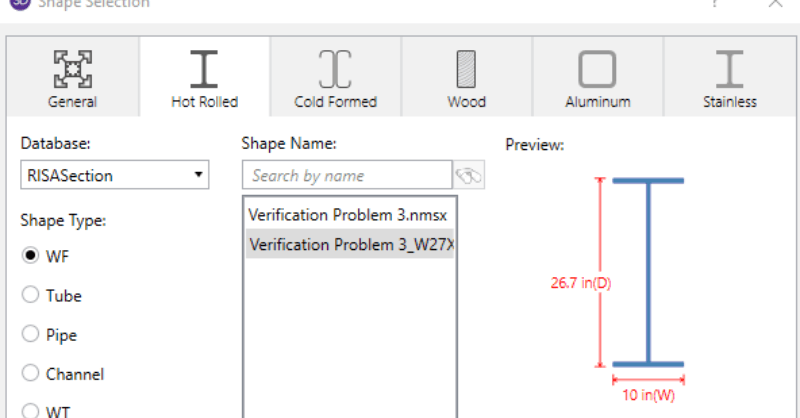
When using RISA Integration between RISASection and RISA-3D, RISA-2D and/or RISAFloor, there are a few common mistakes that people make when...