 By: Admin
What do the Unbraced Length commands Segment and Lbyy mean?
Aside from leaving an unbraced length blank or inputting a fixed distance, you can harness the program’s ability to use a limited intelligence for...

Try the Complete RISA Suite for
10 Days FREE

RISA Education

Video Library

Online Help

Get Support

About Us
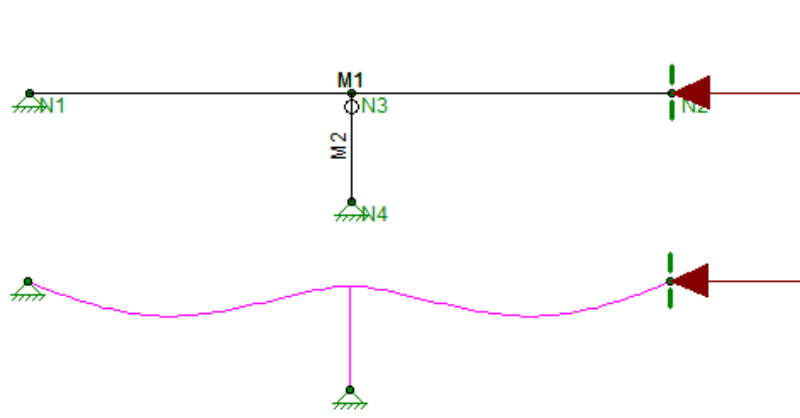
The axial compression and flexure strength of beams and columns is dependent on the spacing of elements which provide bracing along the length of those members. You may specify unbraced lengths as a fixed distance or by using RISA’s Unbraced Length Commands. These unbraced lengths are used for member capacity calculations. However, specifying bracing via unbraced lengths does not provide physical bracing to the model for analysis. It only affects the member capacity calculated for code checks. See the example below.
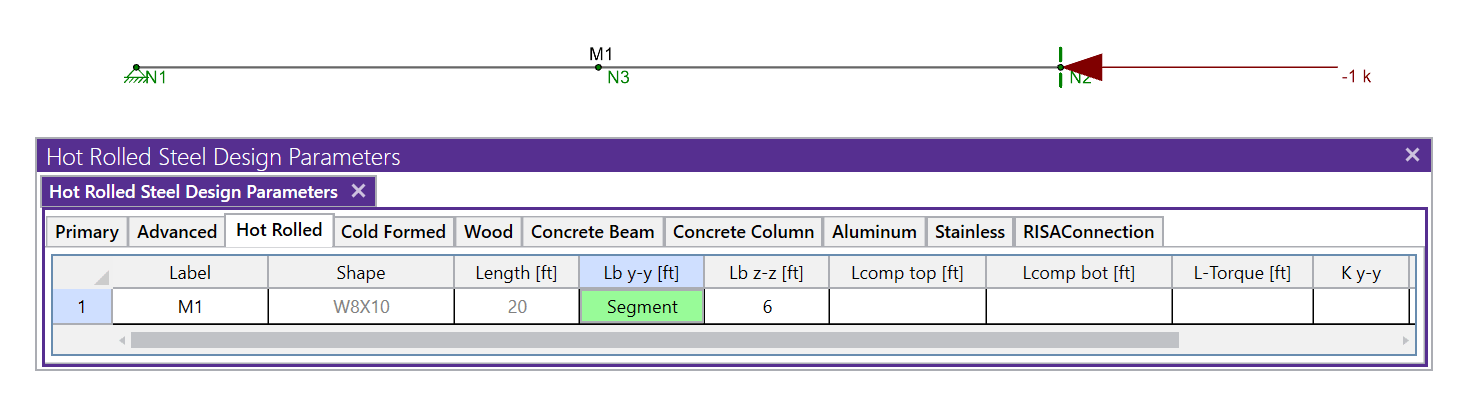
For compression capacity, member M1 (above) is braced at N3 based on specified Lbyy and Lbzz.
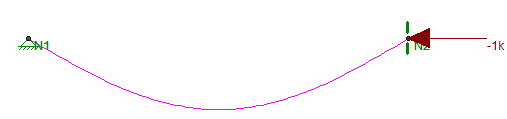
However, for analysis this member is not considered braced (see above)
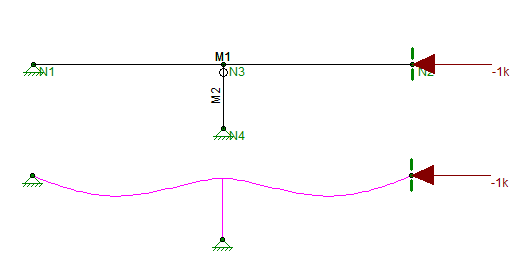
A bracing member (M2) must be modeled to provide bracing for analysis
Tags:

Aside from leaving an unbraced length blank or inputting a fixed distance, you can harness the program’s ability to use a limited intelligence for...
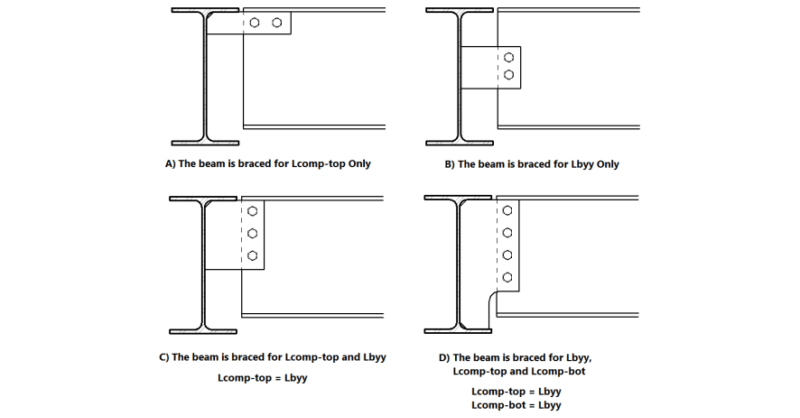
Understanding unbraced lengths and how RISA software accounts for them is essential in the design of any project. In RISA there are three main...
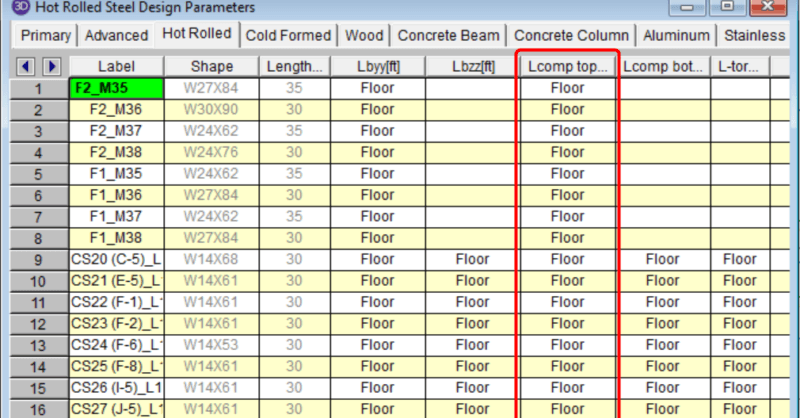
In a RISAFloor model the columns and beams can be assigned unbraced lengths, or the program may calculate them automatically. This unbraced length...