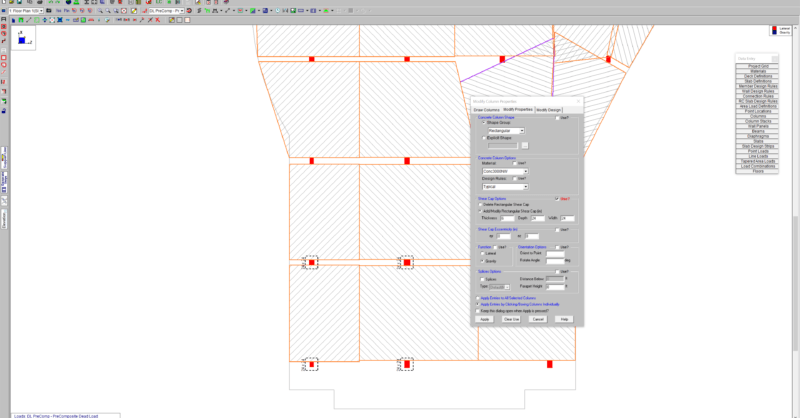
How to Thicken a Slab
RISAFloor ES allows you to model concrete slabs of any thickness. However, there might be sections of the building that require a thicker slab....

Try the Complete RISA Suite for
10 Days FREE

RISA Education

Video Library

Online Help

Get Support

About Us
Since the release of RISAFloor v15 and ADAPT-Builder v20, both which include the latest update to the ACI code (ACI 318-19), some customers have asked our support team why they're experiencing increased slab deflections. These increased deflections are the result of changes in the calculation of the effective moment of inertia, Ie, for slabs that was made in ACI 318-19 code, compared to the previous ACI 318-14 code.
In the ACI 318-14 Building Code Requirements for Structural Concrete code (as well as previous versions of the ACI code) the calculation for the effective moment of inertia, Ie for nonprestressed members was as follows:
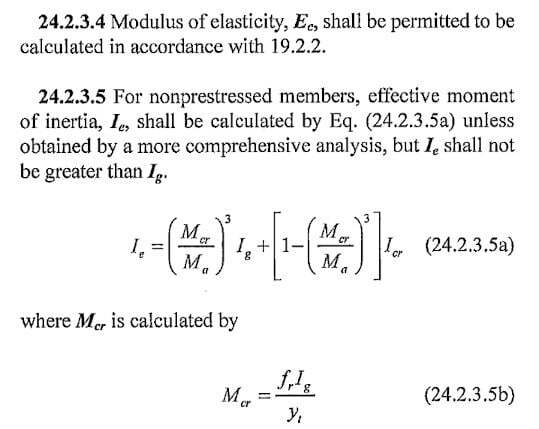
The use of the effective moment of inertia, Ie, was developed to provide a transition between the upper and lower bounds of the gross moment of inertia, Ig and the cracked moment of inertia, Icr as a function of the ratio of Mcr/Ma.
By contrast, the ACI 318-19 code incorporates a new calculation of the effective moment of inertia, Ie, which is dependent on how the applied moment Ma compares to a ratio of 2/3Mcr (the cracking moment). The complete calculation is as shown below:
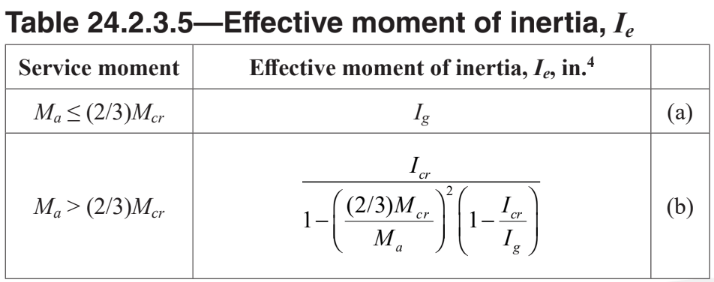
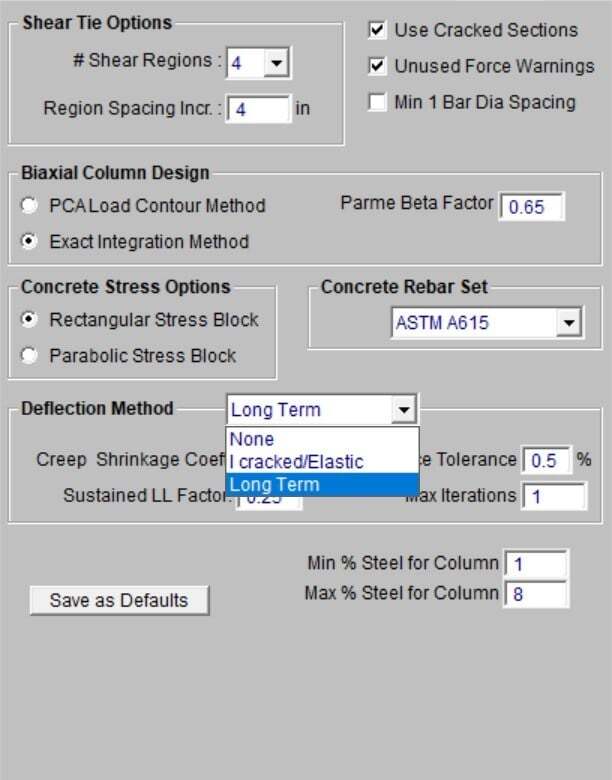
These new equations will be utilized to calculate the effective moment of inertia when the long-term deflection option is enabled for user defined slabs in RISAFloor ES.
To better understand this change, the graph below shows a plot of the ratio of Ie/Ig vs. the ratio of Ma/Mcr for both the ACI 318-14 and the ACI 318-19.
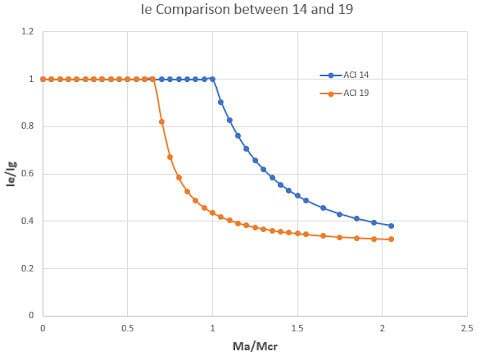
As shown above, the value of Ie/Ig drops quickly at 2/3Mcr and continues until roughly Mcr. For slabs that fall into this category, a larger deflection will be present when utilizing the ACI 318-19 code.
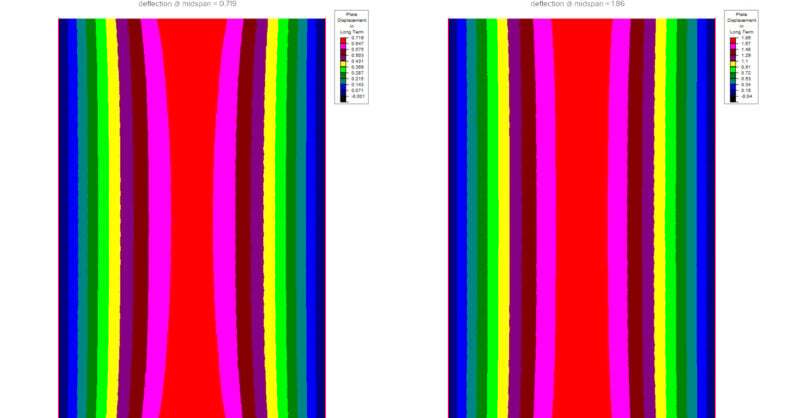
Using a simple elevated slab model in RISAFloor ES, we can see the difference in the ratio between Ie/Ig in the ACI 318-14 and ACI 318-19 codes in the image below:
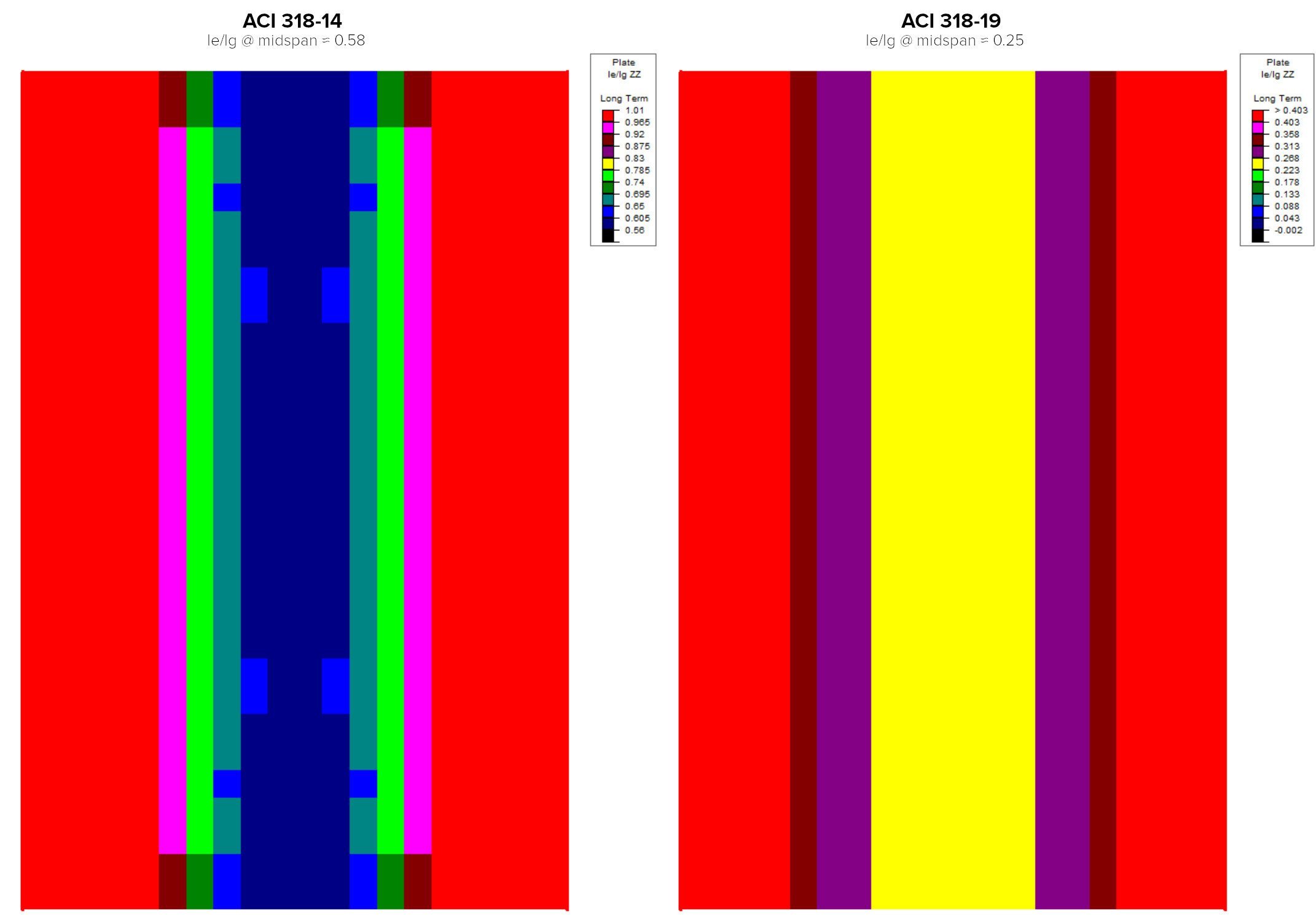
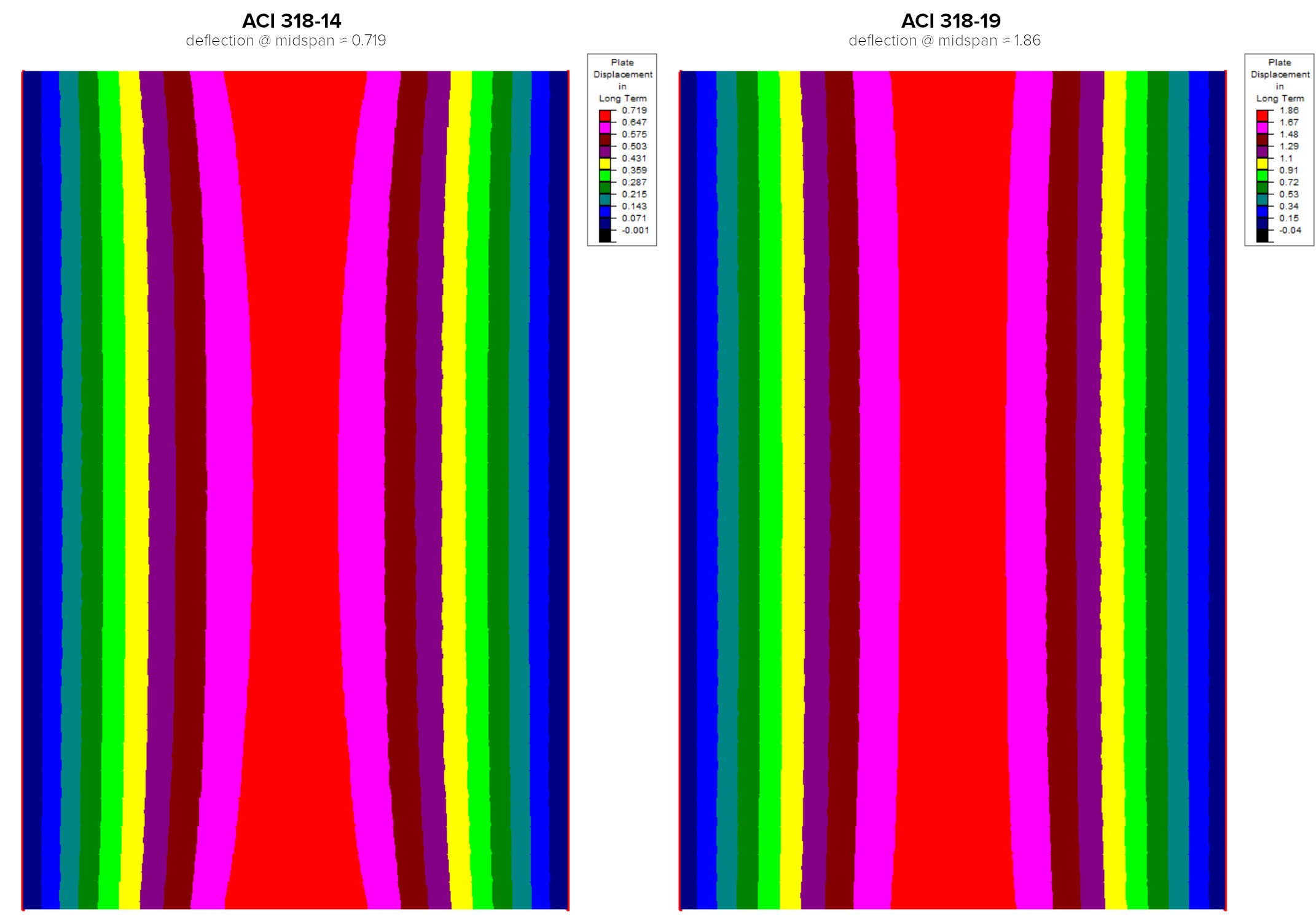
For the ACI 318-14 code, the ratio is roughly 0.58 while the ratio in the ACI 318-19 code is approximately 0.25. Comparing these values to the graph plotted above, we see the ACI 318-19 code renders a larger value of Ma/Mcr, which ultimately leads to a larger deflection (0.719" vs. 1.86").
For more information about long-term deflection calculations in RISAFloor ES, search Long Term Deflections in the RISAFloor Help file.
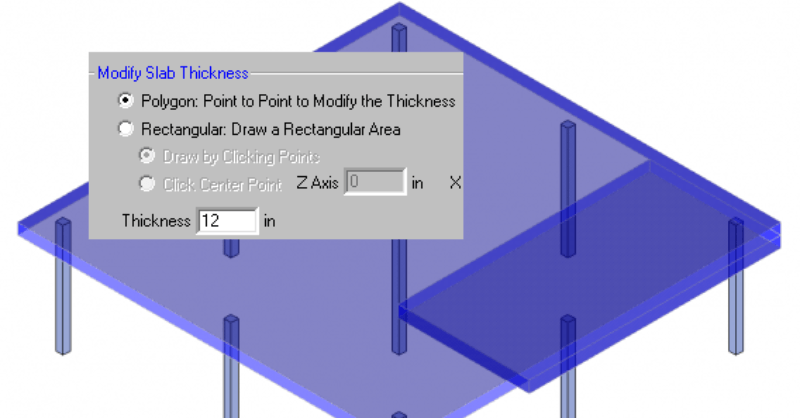
RISAFloor ES allows you to model concrete slabs of any thickness. However, there might be sections of the building that require a thicker slab....
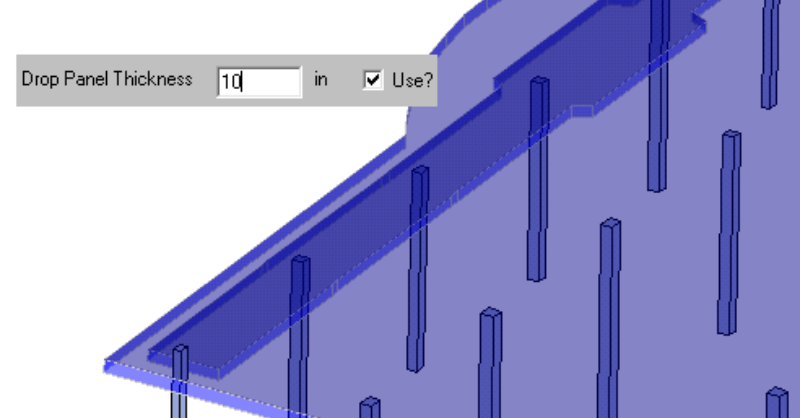
In RISAFloor ES, you can quickly thicken the slab in the column strip area with the Drop Panel tool. The column strip is typically the area of...