 By: Admin

Improving Mass Participation in RISA-3D
In structural engineering, a modal analysis uses the overall mass and stiffness of a structure to find the various periods at which the structure...

Try the Complete RISA Suite for
10 Days FREE

RISA Education

Video Library

Online Help

Get Support

About Us
The applied loads in a response spectrum analysis (RSA) are the applied masses times the accelerations in the response spectra. Each mode of vibration produces its own set of joint reactions. The reactions for each mode obey statics as shown in the portal frame example shown below:

Response Spectrum Analysis involves the statistical combination of the response from multiple modes. A loss of sign results when the individual modal results are combined together to form the total RSA result. Below is an example of the equations used for Square Root Sum of Squares (SRSS) method:

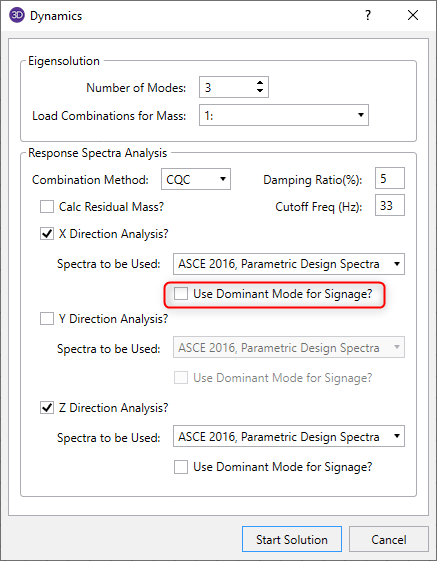
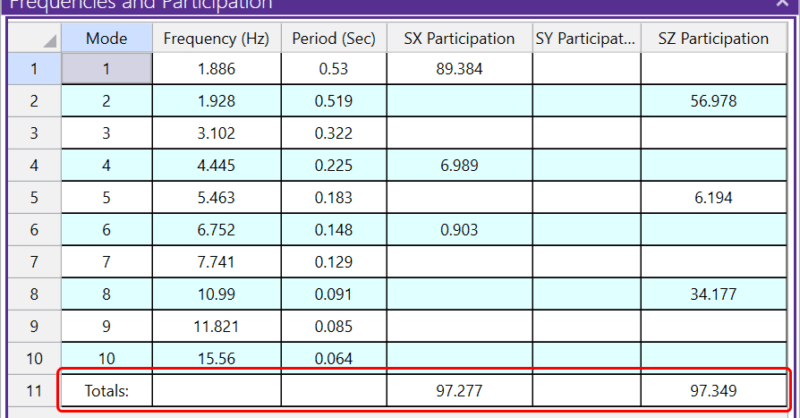
The above equation makes it clear that the final results for R1 and R2 will have the same sign despite the fact that individual modal results (R11 and R21) may have had opposite signs. If this were a statically applied lateral load, the reactions would be equal and opposite with a total net upwards reaction of zero. It is possible for the model to approximately match statics if the option to Use Dominant Mode for Signage is selected. This option merely looks at the reactions for the mode with the highest % mass participation and assigns a positive or negative sign to each joint reaction based on the results for that one individual mode. A model is generally considered to have a dominant mode if the mode with the highest mass participation in that direction is 70% or greater.
In structural engineering, a modal analysis uses the overall mass and stiffness of a structure to find the various periods at which the structure...
RISA-3D has two ways of automatically generating seismic-related Basic Load Categories (BLCs) which can be later referenced in the Load...
When running a Response Spectrum analysis for seismic design, the response for high frequency modes can be included without solving for their...