Tips & Tricks

December 29, 2025

What’s New for IBC 2024 in RISA: A Closer Look

With RISA’s latest release of RISA-3D v23.0.1, we’re continuing to expand support for IBC 2024, helping engineers stay aligned with the latest building code requirements as adoption accelerates across the U.S.—including federally funded projects. This release builds on v23.0.0 ASCE 7-22 enhancements and adds key material design updates that move RISA further into full IBC 2024 compliance. New Material Design Updates Supporting IBC 2024 The upcoming release introduces several important design code updates referenced by IBC 2024, including: Steel Seismic design per AISC 341-22 Prequalified connections per AISC 358-22 Continued support for AISC 360-22 (16th Edition) steel design Ongoing updates to the hot-rolled shape database, including compatibility with both 15th and 16th Edition steel manuals These updates support modern seismic detailing requirements and ensure consistency with current steel industry standards. Masonry Masonry design per TMS 402-22, aligning with the latest strength and serviceability provisions adopted by IBC 2024. Key updates include: Revisions to shear design equations, including clarified definitions of shear area as outlined in Table 4.4.5, improving consistency and transparency in shear capacity calculations. Updated strength reduction factors for flexure and combined flexure + axial. Unlike previous editions that used a fixed ϕ-factor of 0.9, TMS 402-22 introduces tension-controlled,…

Read More

Governing Load Combinations for Shear in Concrete Columns
August 2, 2018

Governing Load Combinations for Shear in Concrete Columns

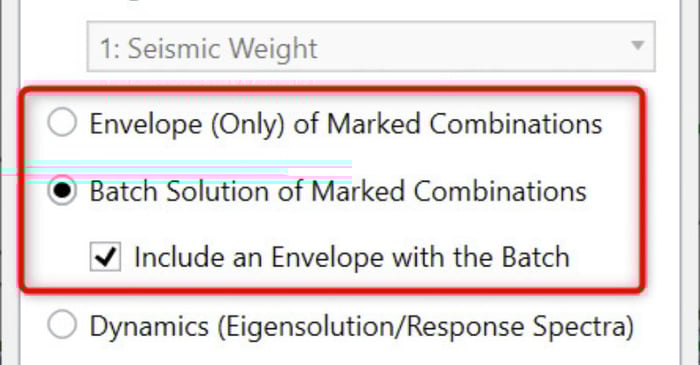
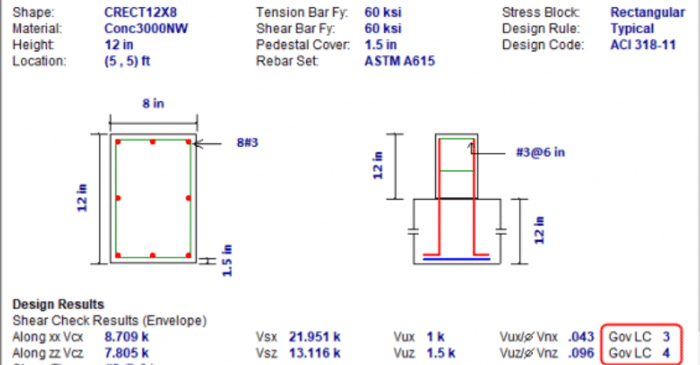
For concrete column members, the load combination producing the maximum shear code check is reported in the Detail Report and corresponding Results spreadsheet. Since concrete is evaluated based on a batch solution, this can be useful when shear governs the design.
Read More
Beam Deflection Ratio Options
June 21, 2018

Beam Deflection Ratio Options

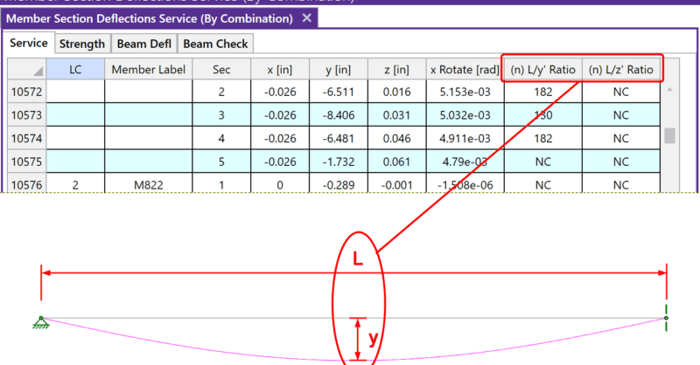
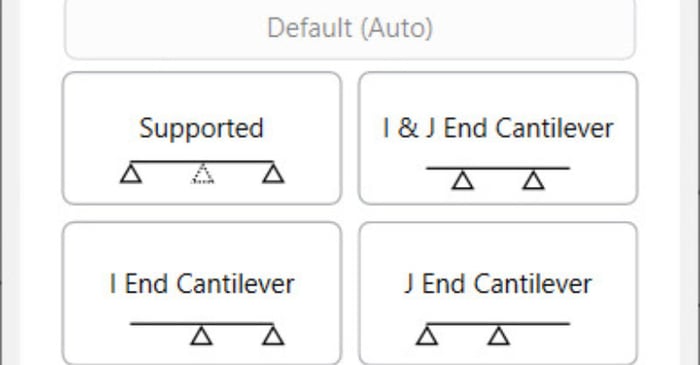
RISA-3D v16.0.4 introduces an enhancement that will allow for more control over the beam deflection ratio through Deflection Ratio Options. As part of the member properties, you can now designate the ends of single and multi-span beams as a cantilever or supported. This will determine whether the...

Read More
Improved Drift Reporting
September 11, 2017

Improved Drift Reporting

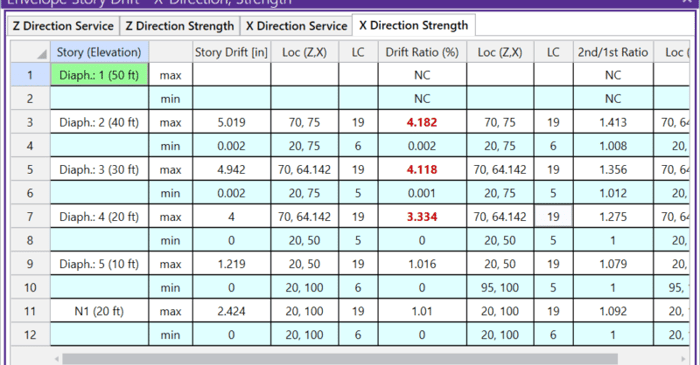
RISA-3D v15 now includes automatic drift definitions for diaphragms as well as simplified story drift application. The reported drift results have been updated as well, and are now much more relevant for today’s codes. Drift results will report results in red text when seismic drift exceeds the...

Read More
Camber Design Rules in RISAFloor
July 12, 2016

Camber Design Rules in RISAFloor

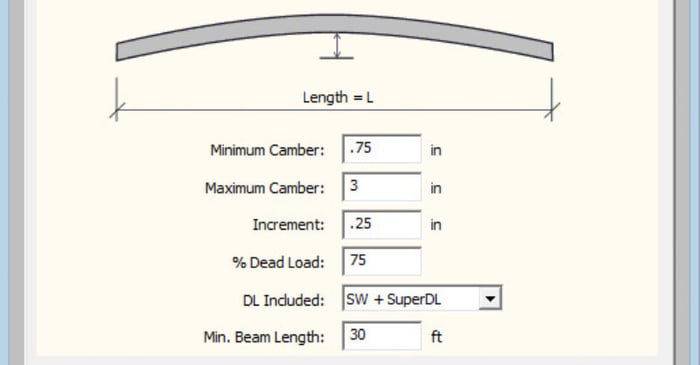
RISAFloor has the ability to assign camber design rules which allow the user more control over which members are cambered. A camber is the slight upward curvature of a steel beam which is used to compensate for deflection. A user can assign a camber directly to a member or set up design rules to...

Read More
Envelope Detail Report Results
December 9, 2015

Envelope Detail Report Results

RISA-3D v14 introduced envelope detail reports for all material members. This means that you can see the enveloped solution (force diagrams and governing code check values) in the detail report for each member when you solve either an Envelope or Batch + Envelope solution type.

Read More
Why don’t the Beams in my Frame have axial force?
September 9, 2015

Why don’t the Beams in my Frame have axial force?

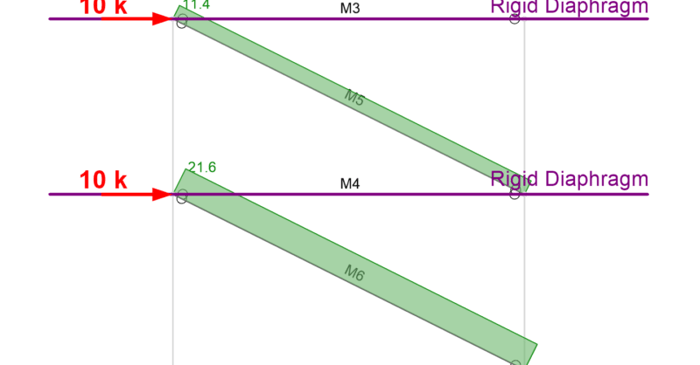
The beams in a lateral force resisting system, such as a braced frame or moment frame, typically carry a significant axial force. In the example below (with no diaphragms) the beam (M4) carries a significant axial tension.

Read More
What is a Rigid Link in RISA-3D?
August 27, 2014

What is a Rigid Link in RISA-3D?

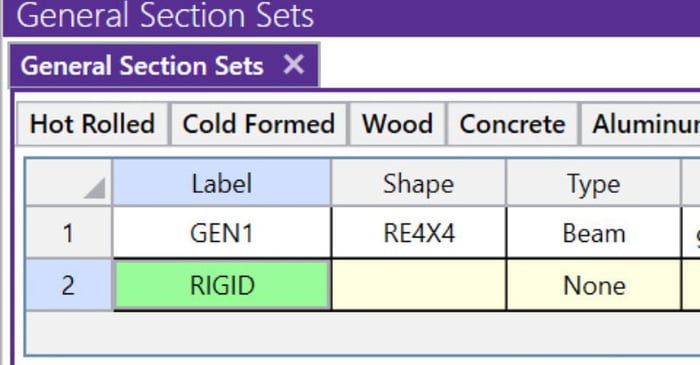
A rigid link is a member element in RISA-3D that can be used for many advanced modeling procedures. It is so useful that it is included as one of the default member Section Sets, as you’ll see below.

Read More
What is the Tau b Factor and how does it affect my analysis?
October 9, 2013

What is the Tau b Factor and how does it affect my analysis?

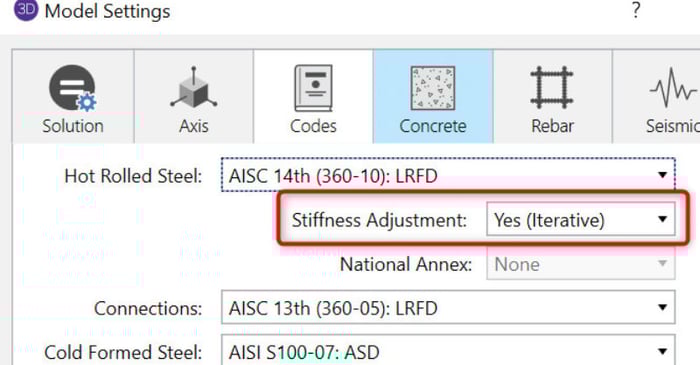
When solving a RISA-3D model with hot rolled steel members under the AISC 360-05 (13th Edition) or AISC 360-10 (14th Edition) codes you may find references to a factor called Tau_b. To understand what this factor is you should first be familiar with the Stiffness Adjustment in RISA-3D, then see the...

Read More