



December 16, 2015
Concrete Design per ACI 318-14 Concrete Code now Available
The new ACI 318-14 code has been implemented into RISA-3D v14, RISAFloor v10, and RISAFoundation v8.
The new ACI 318-14 code has been implemented into RISA-3D v14, RISAFloor v10, and RISAFoundation v8.
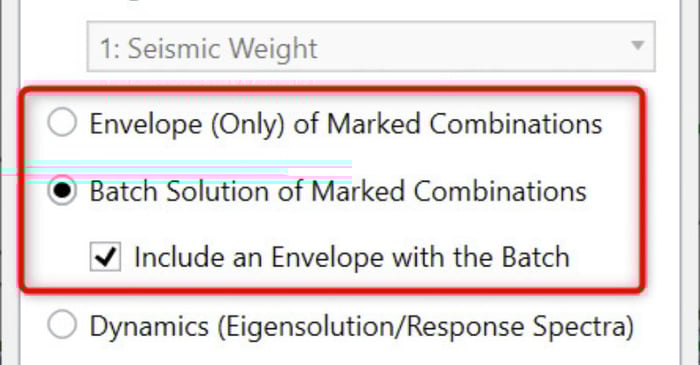
RISA-3D v14 introduced envelope detail reports for all material members. This means that you can see the enveloped solution (force diagrams and governing code check values) in the detail report for each member when you solve either an Envelope or Batch + Envelope solution type.

Time history analysis solves for normal analysis results (joint displacements, member forces, code checks, etc.) based on loading that varies with time. For some analyses it may be useful to view an animation of the deflected shape of the structure as a function of time. This blog topic serves as a...
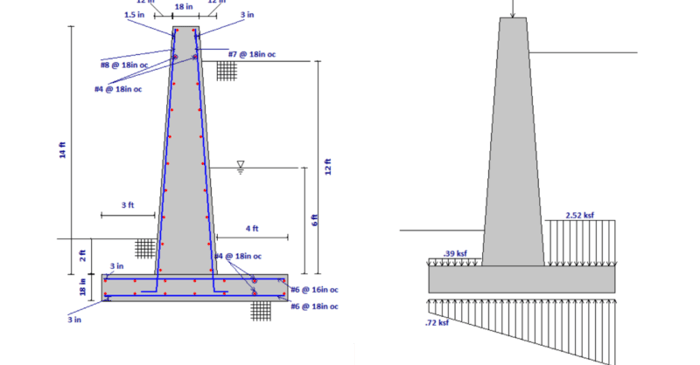
The batter dimensions can be set from Wall Footing Definitions:
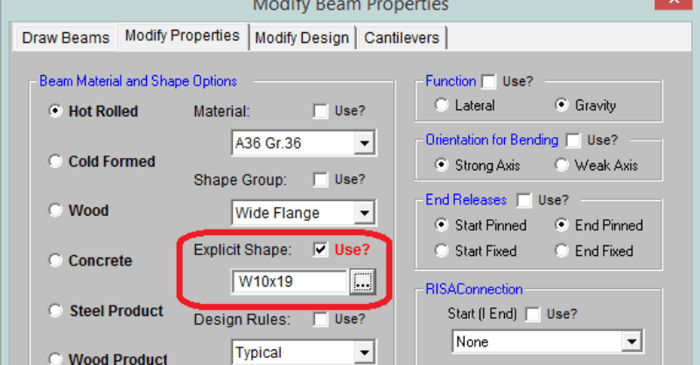
RISAFloor is a design program in which it takes basic shape criteria about your beam or column members and then selects an optimal size to meet strength and serviceability criteria. However, the program can just as easily perform a design check for an as-built condition by defining specific member...

In RISAFoundation, Design Strips are used to create regions in a slab for reinforcement design. Design strip size and shape is determined by the user, see the Help- Slab- Design Strip Width topic.
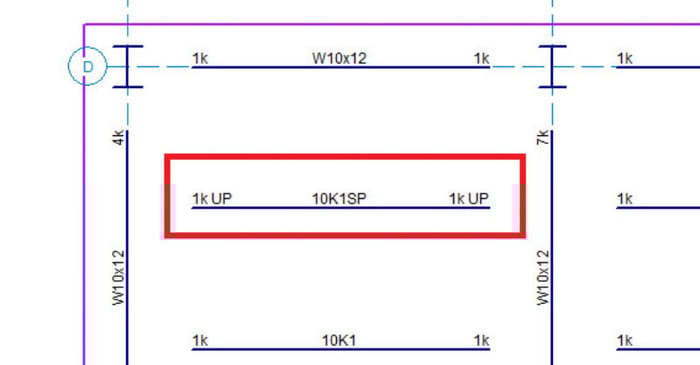
Have you been in RISAFloor performing a steel product design and noticed an (SP) extension to a joist designation? The following will discuss when the program designs for these special loading conditions.
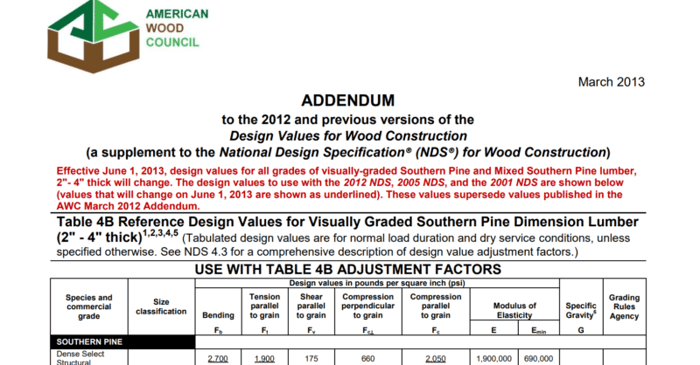
You may notice discrepancies in the wood design values when comparing RISA with the NDS 2012 and older versions of the code. The American Wood Council updated the wood design values in the Addendum, which supersede the values used in the NDS 2012 and previous versions of the Design Values for Wood...
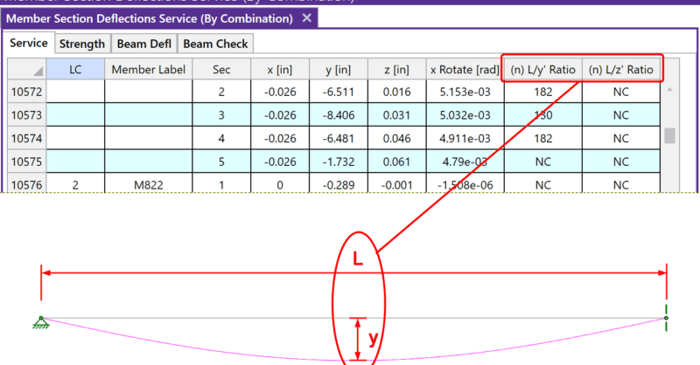
After solving a model, you will see in the Member Deflections spreadsheet the following deflection ratios: