Tips & Tricks

December 29, 2025

What’s New for IBC 2024 in RISA: A Closer Look

With RISA’s latest release of RISA-3D v23.0.1, we’re continuing to expand support for IBC 2024, helping engineers stay aligned with the latest building code requirements as adoption accelerates across the U.S.—including federally funded projects. This release builds on v23.0.0 ASCE 7-22 enhancements and adds key material design updates that move RISA further into full IBC 2024 compliance. New Material Design Updates Supporting IBC 2024 The upcoming release introduces several important design code updates referenced by IBC 2024, including: Steel Seismic design per AISC 341-22 Prequalified connections per AISC 358-22 Continued support for AISC 360-22 (16th Edition) steel design Ongoing updates to the hot-rolled shape database, including compatibility with both 15th and 16th Edition steel manuals These updates support modern seismic detailing requirements and ensure consistency with current steel industry standards. Masonry Masonry design per TMS 402-22, aligning with the latest strength and serviceability provisions adopted by IBC 2024. Key updates include: Revisions to shear design equations, including clarified definitions of shear area as outlined in Table 4.4.5, improving consistency and transparency in shear capacity calculations. Updated strength reduction factors for flexure and combined flexure + axial. Unlike previous editions that used a fixed ϕ-factor of 0.9, TMS 402-22 introduces tension-controlled,…

Read More

Pinned Beams in Semi-Rigid Diaphragms
May 16, 2019

Pinned Beams in Semi-Rigid Diaphragms

When using semi-rigid diaphragms in a RISAFloor/RISA-3D model, it is possible to see negative moments at the ends of pinned beams as a result of the link between the semi-rigid diaphragm and the beam-column connection.
Read More
Assigning Seismic Loads in RISA-3D
March 28, 2019

Assigning Seismic Loads in RISA-3D

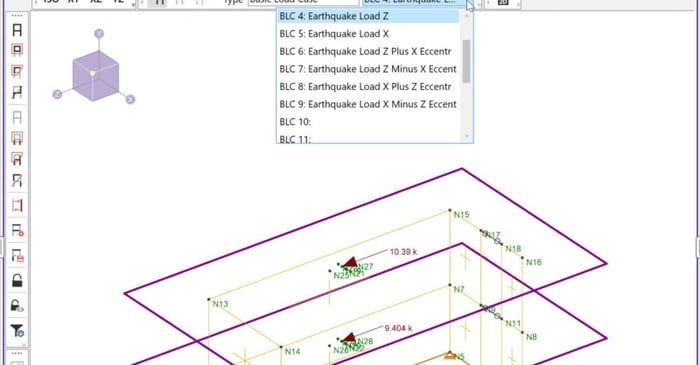
RISA-3D has two ways of automatically generating seismic-related Basic Load Categories (BLCs) which can be later referenced in the Load Combinations (LCs):

Read More
What wood wall design method should I use?
January 3, 2019

What wood wall design method should I use?

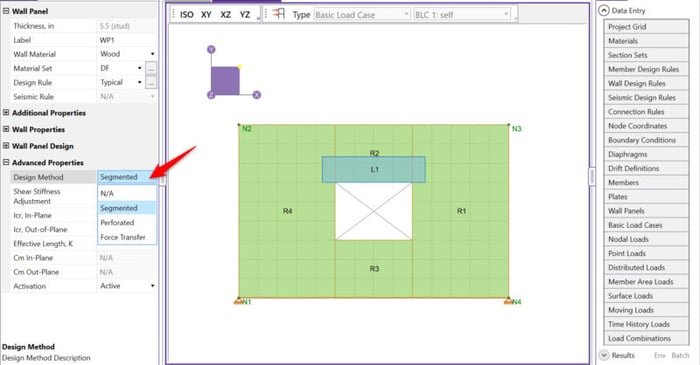
RISA-3D is one of the few pieces of software on the market offering wood shear wall analysis and design accompanied by multiple design methods to best suit your detailing needs.

Read More
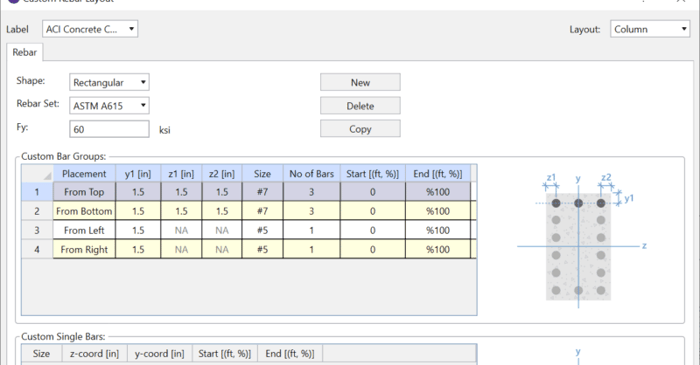
How to Create and Apply A Custom Rebar Layout
December 20, 2018

How to Create and Apply A Custom Rebar Layout

Applying a Custom Rebar Layout in RISA-3D: To begin creating a custom rebar layout, simply click the Custom Rebar Layout button located in the Advanced tab of the ribbon toolbar.

Read More
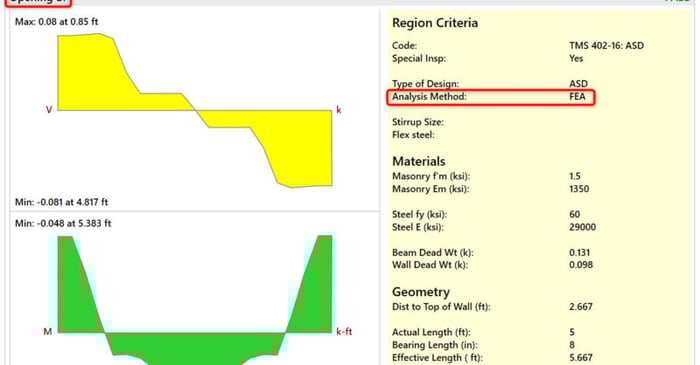
Masonry Lintel Analysis using FEA
November 2, 2018

Masonry Lintel Analysis using FEA

In RISA-3D, the current method of design for masonry lintels is Simply Supported where the masonry lintels are idealized into a simply supported pin-pin beam configuration. Now, masonry lintels can instead be analyzed using finite element analysis. With this method, the lintel will be fully...

Read More
What’s New in the NBC 2015?
October 26, 2018

What’s New in the NBC 2015?

The 2015 NBC compliant codes have been implemented into RISA-3D v17.0, RISAFloor v13.0 and RISAFoundation V.11.0!

Read More
ASCE 7-16 Is Now Available!
October 25, 2018

ASCE 7-16 Is Now Available!

The 2016 edition of ASCE Minimum Design Loads and Associated Criteria for Buildings and Other Structures (ASCE 7-16) is now available in RISA-3D v17.0, RISAFloor v13.0, and RISAFoundation v11.0!

Read More
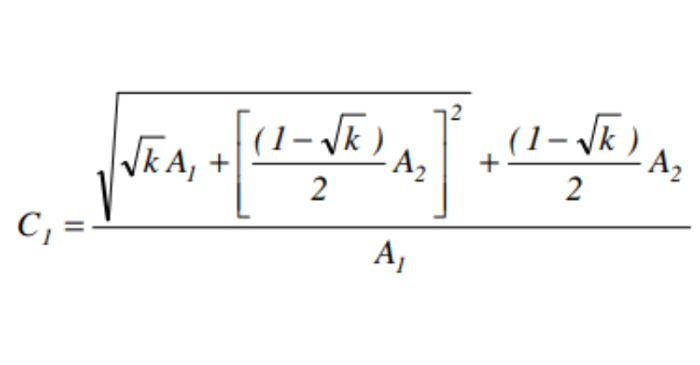
Eurocode C1 Factor for Lateral Torsional Buckling
October 19, 2018

Eurocode C1 Factor for Lateral Torsional Buckling

Eurocode lateral torsional buckling capacity is calculated per equations in Annex F in the ENV 1993-1-1:1992. This calculation uses variables C1, C2 and C3. Since there is no generic formula in the Eurocode to calculate the moment gradient factor, C1, RISA will use the widely accepted López, Yong...

Read More
Updates to Wood Wall Aspect Ratio Limits in RISA-3D
October 18, 2018

Updates to Wood Wall Aspect Ratio Limits in RISA-3D

With the initial implementation of wood wall design in RISA-3D, the wall aspect ratio was calculated as the full height of the wall divided by the width of the region.This was intended to accommodate balloon framed multi-story walls that were drawn as one continuous wall stack. With recent...

Read More