



December 19, 2017
Cold-Formed Steel Design Codes Update
An update to the Cold-Formed Steel Design Codes has been added to RISA-3D v16.0 and RISAFloor v12.0. Updated Codes include:
An update to the Cold-Formed Steel Design Codes has been added to RISA-3D v16.0 and RISAFloor v12.0. Updated Codes include:

The new British Annex (BS EN1993-1-1:2014) for the European Hot Rolled Steel material code is now available in RISA-3D v16 and RISAFloor v12.
Stainless Steel provisions are now available in RISA-3D v16 according to the AISC Design Guide 27 - Structural Stainless Steel.
You can now set the L-Torque length for the EN1993-1-1:2014 code in RISA-3D and RISAFloor. In previous versions of the Eurocode, RISAFloor and RISA-3D used the full member length as the torque length when calculating torsional buckling. Now, per EN1993-1-1:2014 Section 13.3.2, we’ve added the...
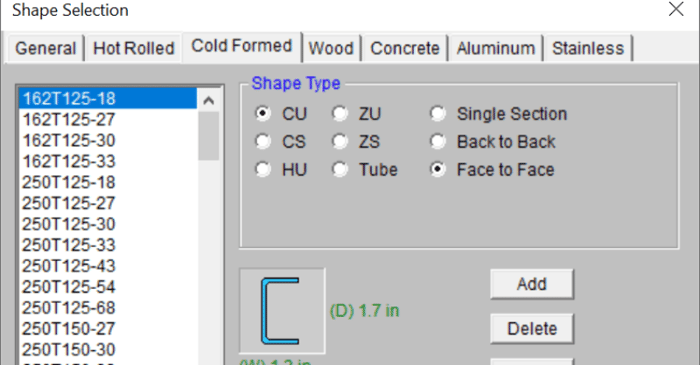
RISA-3D can design the Cold Formed Steel face-to-face channel and track sections. You can also get design of a Cold Formed Steel tube shape in RISA-3D. The Shape Selection dialog will allow you to model the built-up sections by selecting “Face to Face” shown below.

RISA-3D now supports hot rolled steel design for the Canadian market according to CSA S16-14.
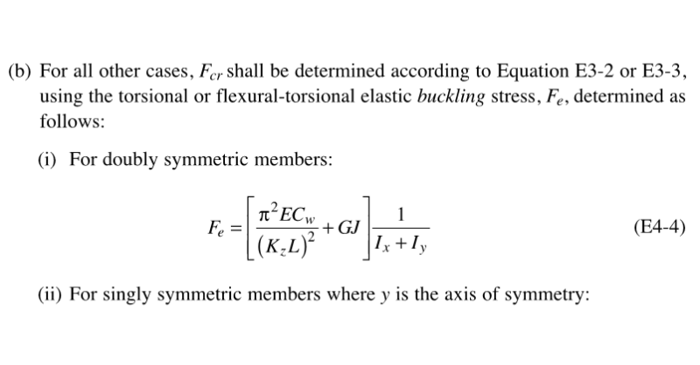
In RISA-3D’s addition of the AISC 14th Edition code we added Section E4 checks to wide flange members. Section E4 is Torsional and Flexural-Torsional Buckling of Members Without Slender Elements and is for compression capacity.
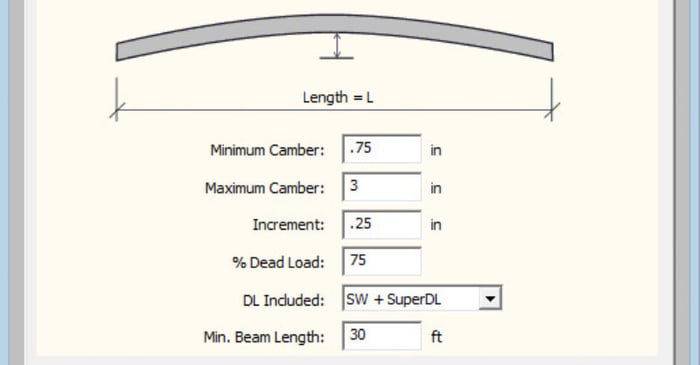
RISAFloor has the ability to assign camber design rules which allow the user more control over which members are cambered. A camber is the slight upward curvature of a steel beam which is used to compensate for deflection. A user can assign a camber directly to a member or set up design rules to...
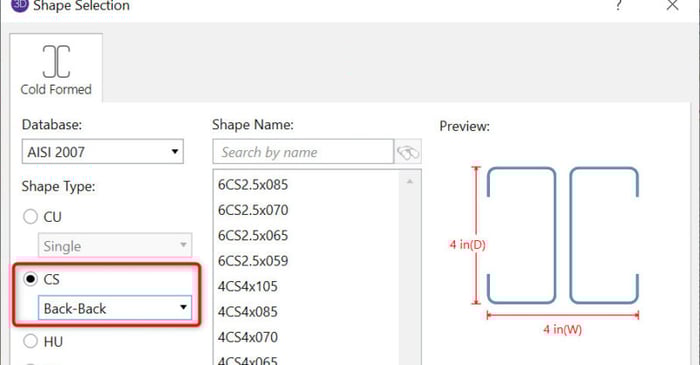
Cold Formed Steel channels are often built-up as back-to-back sections to help strengthen them. RISA-3D can design the Cold Formed Steel back-to-back channel and track sections. The Shape Selection dialog will allow you to model the built –up sections by selecting “Back to Back” shown below.