Tips & Tricks

December 29, 2025

What’s New for IBC 2024 in RISA: A Closer Look

With RISA’s latest release of RISA-3D v23.0.1, we’re continuing to expand support for IBC 2024, helping engineers stay aligned with the latest building code requirements as adoption accelerates across the U.S.—including federally funded projects. This release builds on v23.0.0 ASCE 7-22 enhancements and adds key material design updates that move RISA further into full IBC 2024 compliance. New Material Design Updates Supporting IBC 2024 The upcoming release introduces several important design code updates referenced by IBC 2024, including: Steel Seismic design per AISC 341-22 Prequalified connections per AISC 358-22 Continued support for AISC 360-22 (16th Edition) steel design Ongoing updates to the hot-rolled shape database, including compatibility with both 15th and 16th Edition steel manuals These updates support modern seismic detailing requirements and ensure consistency with current steel industry standards. Masonry Masonry design per TMS 402-22, aligning with the latest strength and serviceability provisions adopted by IBC 2024. Key updates include: Revisions to shear design equations, including clarified definitions of shear area as outlined in Table 4.4.5, improving consistency and transparency in shear capacity calculations. Updated strength reduction factors for flexure and combined flexure + axial. Unlike previous editions that used a fixed ϕ-factor of 0.9, TMS 402-22 introduces tension-controlled,…

Read More

Nesting Load Combinations
March 27, 2013

Nesting Load Combinations

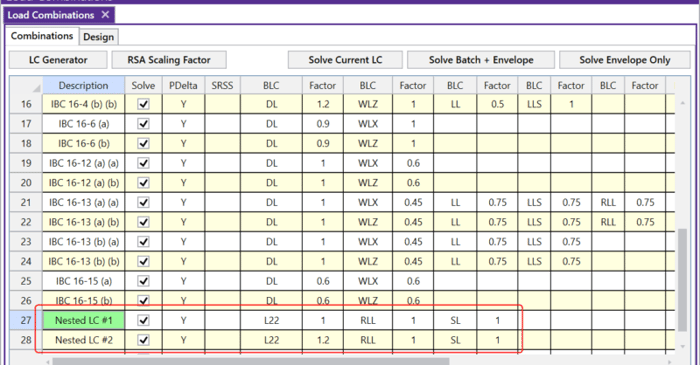
The Load Combinations spreadsheet in RISA-3D is limited to ten columns of BLC and Factor combinations. However, there are times where you may need to include additional entries to your Load Combination. To do this, you can simply “nest” your load combinations.

Read More
Tapered Member Design Using AISC Design Guide 25
February 7, 2013

Tapered Member Design Using AISC Design Guide 25

RISA has now incorporated the tapered member design provisions from Steel Design Guide 25: Frame Design Using Web-Tapered Members written by Richard Kaehler, Don White and Yoon Kuk Kim. These code checking procedures are used whenever the AISC 13th or 14th edition steel codes are selected.

Read More
Slab Modifications in RISAFoundation
January 31, 2013

Slab Modifications in RISAFoundation

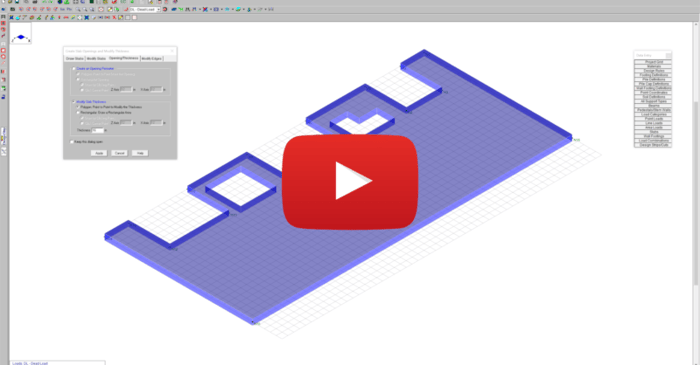
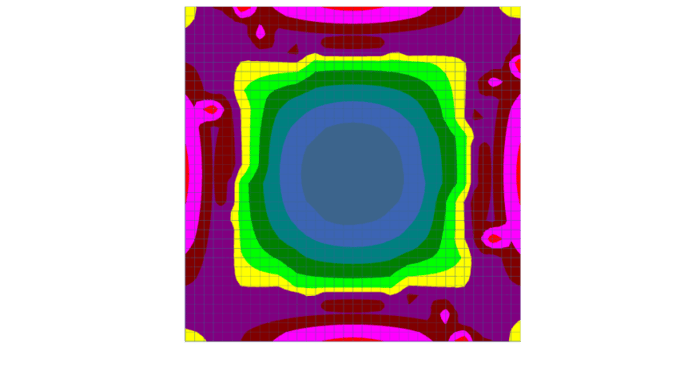
This video shows how slab modifications can used to add an opening or change the thickness of a portion of the slab in RISAFoundation.

Read More
Import DXF Drawing Grid in RISAFloor
January 7, 2013

Import DXF Drawing Grid in RISAFloor

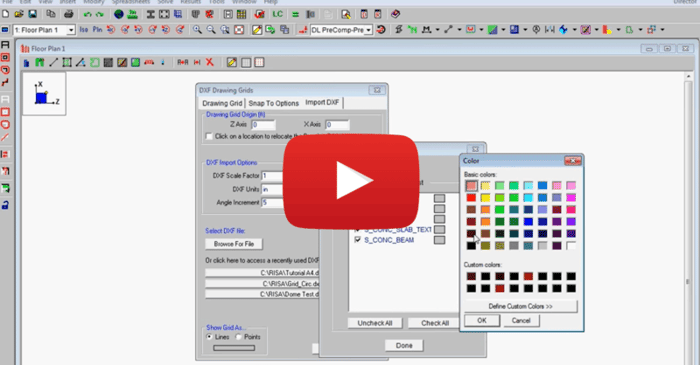
This video shows how to import a DXF as a drawing grid in RISAFloor. To do this, you can save any drawing file as a DXF file format and import points, lines, polylines, arcs and circles into RISAFloor. This gives you the ability to create your own drawing grids with complex geometries and use this...

Read More
Updated Torsional Shape Properties
October 15, 2012

Updated Torsional Shape Properties

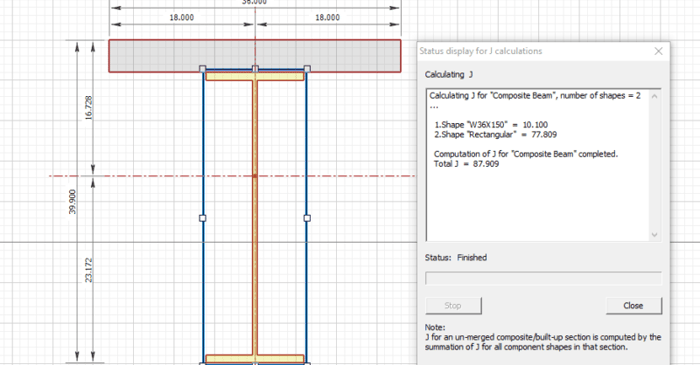
RISASection v2 includes updated torsional shape properties for a more accurate analysis. Check out the video below for more information:

Read More
Using Virtual Joist Girders in RISAFloor
October 10, 2012

Using Virtual Joist Girders in RISAFloor

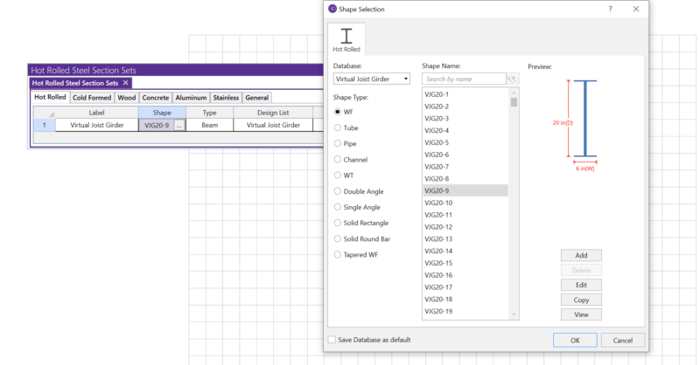
The Steel Joist Institute (SJI) has recently put together a Virtual Joist Girder table which converts common joist sizes into equivalent wide flange beams. This topic describes how to use these Virtual Joist Girders within the RISAFloor program.

Read More
Using Virtual Joist Girders in RISA-3D
October 4, 2012

Using Virtual Joist Girders in RISA-3D

The Steel Joist Institute (SJI) has developed a Virtual Joist Girder table which converts common joist sizes into equivalent wide flange beams for use in RISA-3D.

Read More
How Can I Use a Wall for Shear Only (no Bearing) in RISA-3D?
September 13, 2012

How Can I Use a Wall for Shear Only (no Bearing) in RISA-3D?

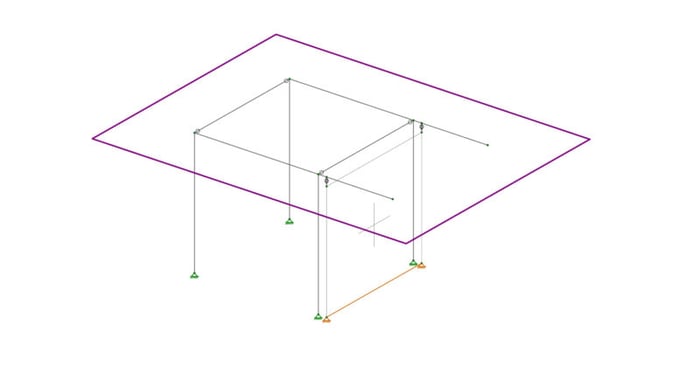
Let’s consider the example of the frame shown below. Suppose there is a diaphragm present at the framing level, and that the wall shown is intended only to handle the lateral loads. In reality the columns will be in-line with the wall, and the cantilever beams will pass over the wall without...

Read More