
Tips & Tricks

December 29, 2025

What’s New for IBC 2024 in RISA: A Closer Look

With RISA’s latest release of RISA-3D v23.0.1, we’re continuing to expand support for IBC 2024, helping engineers stay aligned with the latest building code requirements as adoption accelerates across the U.S.—including federally funded projects. This release builds on v23.0.0 ASCE 7-22 enhancements and adds key material design updates that move RISA further into full IBC 2024 compliance. New Material Design Updates Supporting IBC 2024 The upcoming release introduces several important design code updates referenced by IBC 2024, including: Steel Seismic design per AISC 341-22 Prequalified connections per AISC 358-22 Continued support for AISC 360-22 (16th Edition) steel design Ongoing updates to the hot-rolled shape database, including compatibility with both 15th and 16th Edition steel manuals These updates support modern seismic detailing requirements and ensure consistency with current steel industry standards. Masonry Masonry design per TMS 402-22, aligning with the latest strength and serviceability provisions adopted by IBC 2024. Key updates include: Revisions to shear design equations, including clarified definitions of shear area as outlined in Table 4.4.5, improving consistency and transparency in shear capacity calculations. Updated strength reduction factors for flexure and combined flexure + axial. Unlike previous editions that used a fixed ϕ-factor of 0.9, TMS 402-22 introduces tension-controlled,…

Read More

How to Add a New Pattern to the Moving Load Database
February 18, 2014

How to Add a New Pattern to the Moving Load Database

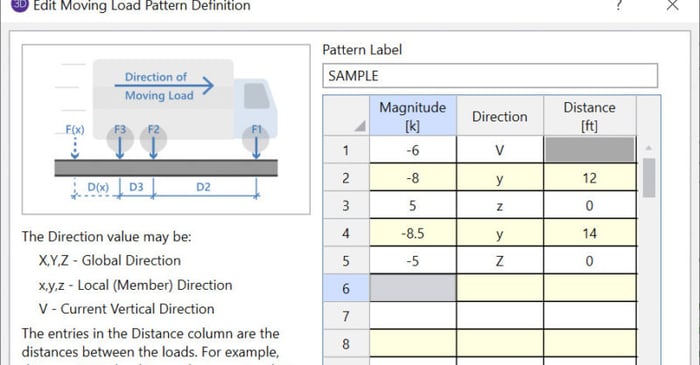
RISA-3D and RISA-2D come with a default list of existing moving load patterns. These are listed in the Moving Loads Library which can be viewed by clicking on the Moving Load Patterns button in the Advanced tab.
Read More
How to model a Geodesic Dome in RISA-3D?
February 5, 2014

How to model a Geodesic Dome in RISA-3D?

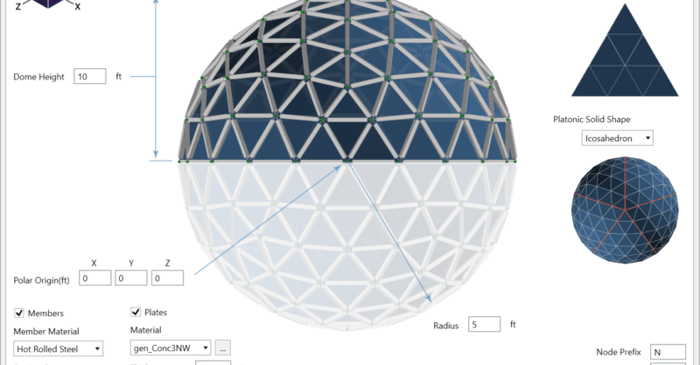
In modeling what would be a rather difficult geometric structure, by using the Templates database in RISA-3D, a geodesic dome can be constructed rather quickly and easily.
Read More
Designing Built-Up Sections using RISA-3D
January 2, 2014

Designing Built-Up Sections using RISA-3D

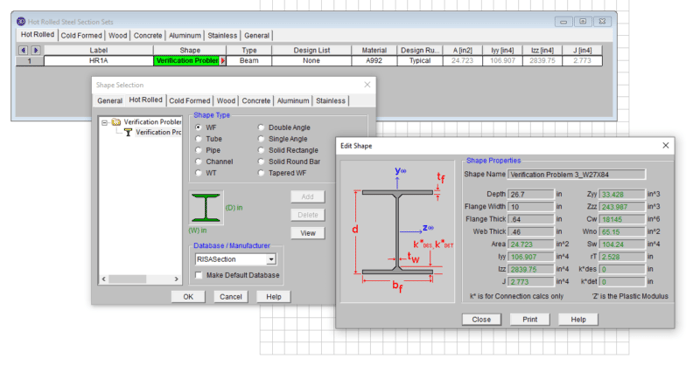
Use RISASection to find the properties of built-up steel sections, then model beams using the same section properties in RISA-3D and get full code-checks using AISC 360. This webinar will teach you how to use RISASection quickly and easily to determine complex section properties.
Read More
How Do I Model a Tapered Pipe?
December 30, 2013

How Do I Model a Tapered Pipe?

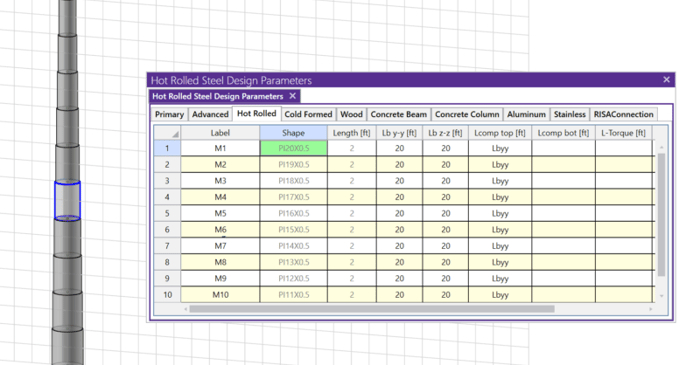
Tapered members are common for metal buildings and pole-type structures. For tapered wide flange members RISA provides a quick way to generate a tapered section that can then be checked per the provisions of AISC Design Guide 25 on tapered wide flanges.

Read More
What are Web Doubler plates used for in RISAConnection?
December 27, 2013

What are Web Doubler plates used for in RISAConnection?

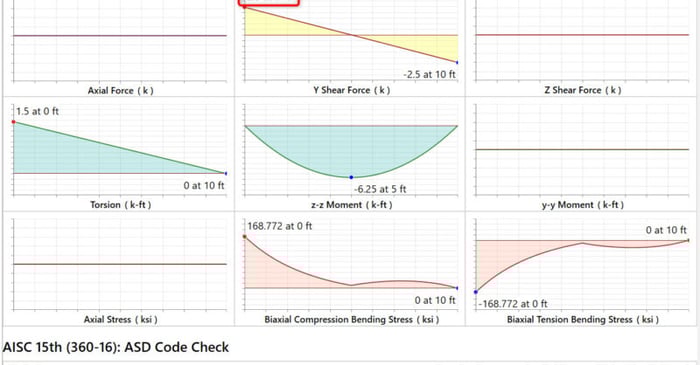
For moment connections in RISAConnection there is an option to place web doubler plates on the column web. These plates act as a reinforcement for the column web to prevent panel zone shear failure. As shown below, when the flanges of a beam in a moment connection connect to a column they form a...
Read More
Why Is My Beam Failing in Shear?
November 20, 2013

Why Is My Beam Failing in Shear?

When solving a RISA-3D model you may find you have a Shear UC (unity check) much higher than expected from bending shear alone. If you open the detail report and compare the shear demand to the shear capacity you may see that the demand/capacity is less than the Max Shear Check reported.
Read More
What is the Tau b Factor and how does it affect my analysis?
October 9, 2013

What is the Tau b Factor and how does it affect my analysis?

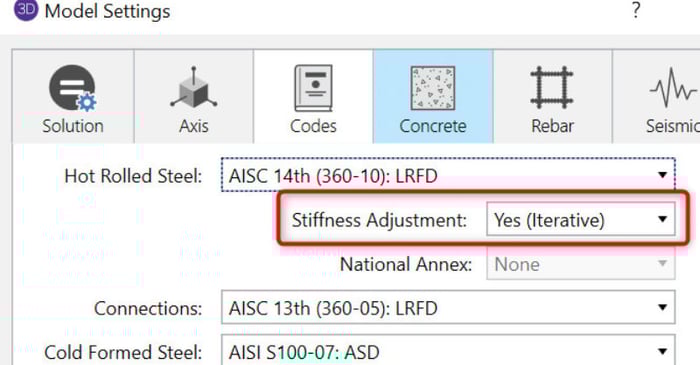
When solving a RISA-3D model with hot rolled steel members under the AISC 360-05 (13th Edition) or AISC 360-10 (14th Edition) codes you may find references to a factor called Tau_b. To understand what this factor is you should first be familiar with the Stiffness Adjustment in RISA-3D, then see the...

Read More