Tips & Tricks

December 29, 2025

What’s New for IBC 2024 in RISA: A Closer Look

With RISA’s latest release of RISA-3D v23.0.1, we’re continuing to expand support for IBC 2024, helping engineers stay aligned with the latest building code requirements as adoption accelerates across the U.S.—including federally funded projects. This release builds on v23.0.0 ASCE 7-22 enhancements and adds key material design updates that move RISA further into full IBC 2024 compliance. New Material Design Updates Supporting IBC 2024 The upcoming release introduces several important design code updates referenced by IBC 2024, including: Steel Seismic design per AISC 341-22 Prequalified connections per AISC 358-22 Continued support for AISC 360-22 (16th Edition) steel design Ongoing updates to the hot-rolled shape database, including compatibility with both 15th and 16th Edition steel manuals These updates support modern seismic detailing requirements and ensure consistency with current steel industry standards. Masonry Masonry design per TMS 402-22, aligning with the latest strength and serviceability provisions adopted by IBC 2024. Key updates include: Revisions to shear design equations, including clarified definitions of shear area as outlined in Table 4.4.5, improving consistency and transparency in shear capacity calculations. Updated strength reduction factors for flexure and combined flexure + axial. Unlike previous editions that used a fixed ϕ-factor of 0.9, TMS 402-22 introduces tension-controlled,…

Read More

User Defined Maximum DCR in ADAPT-Builder
May 24, 2022

User Defined Maximum DCR in ADAPT-Builder

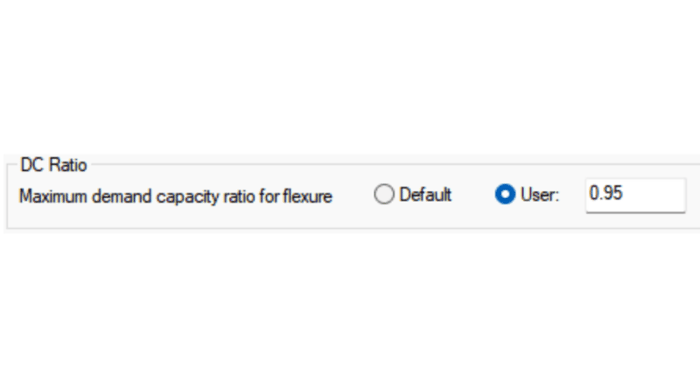
ADAPT-Builder has historically been hard coded to design reinforcement for strength load combinations to a maximum demand/capacity ratio of 1.0. However, clients have expressed the want to be able to have the program reinforce to a user defined maximum DCR. ADAPT-Builder v21.0.1 includes the option...
Read More
Orthotropic Plates in RISA-3D
October 30, 2020

Orthotropic Plates in RISA-3D

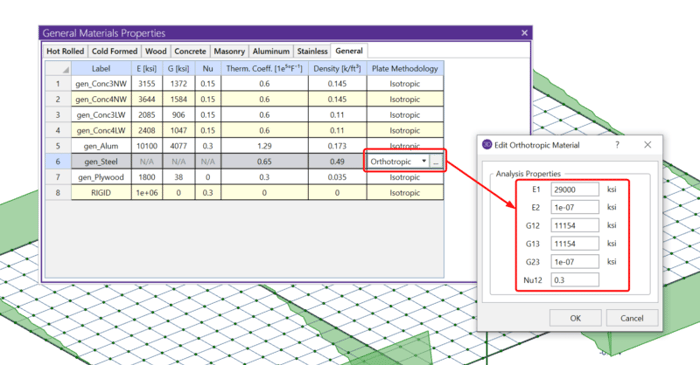
RISA-3D includes the ability to define the plate methodology of a material as orthotropic. In structural analysis and design, it may be useful to define plates or slabs that have different characteristics (stiffness) in the longitudinal and transverse directions. Doing so will result in the plates...

Read More
Pinned Beams in Semi-Rigid Diaphragms
May 16, 2019

Pinned Beams in Semi-Rigid Diaphragms

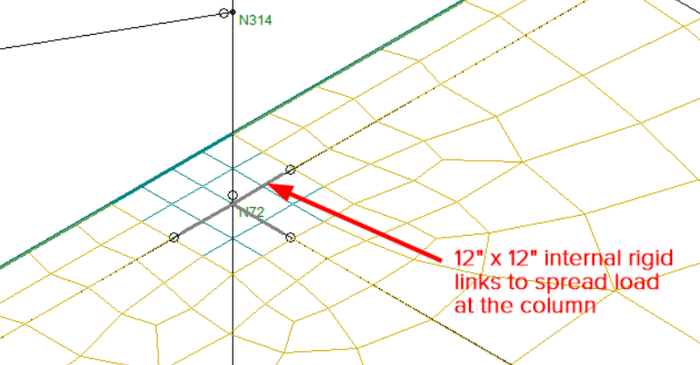
When using semi-rigid diaphragms in a RISAFloor/RISA-3D model, it is possible to see negative moments at the ends of pinned beams as a result of the link between the semi-rigid diaphragm and the beam-column connection.

Read More
Masonry Lintel Analysis using FEA
November 2, 2018

Masonry Lintel Analysis using FEA

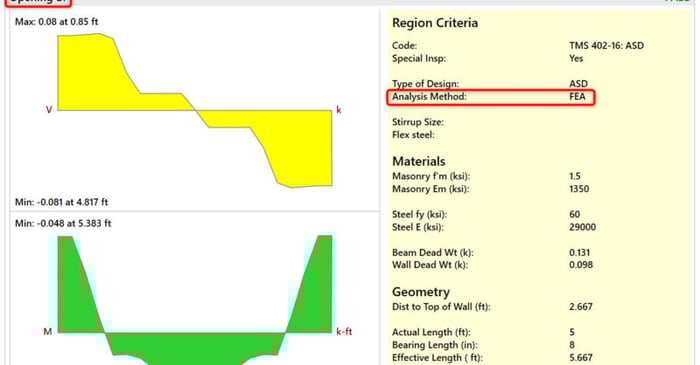
In RISA-3D, the current method of design for masonry lintels is Simply Supported where the masonry lintels are idealized into a simply supported pin-pin beam configuration. Now, masonry lintels can instead be analyzed using finite element analysis. With this method, the lintel will be fully...

Read More
Partial Fixity End Releases in RISA-3D
October 4, 2018

Partial Fixity End Releases in RISA-3D

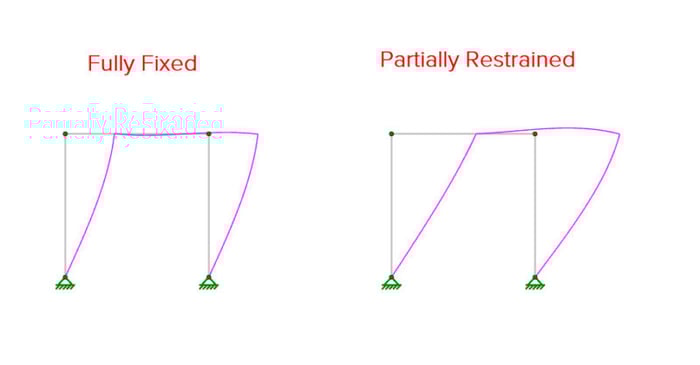
RISA-3D v17.0 now has the ability to model partial fixity member end releases. Partial fixity end releases can be utilized in RISA to model the behavior of a partially restrained or semi-rigid connection that cannot be idealized as fully fixed or pinned. Partially restrained connections are common...

Read More
Analysis Offsets now Available
September 28, 2018

Analysis Offsets now Available

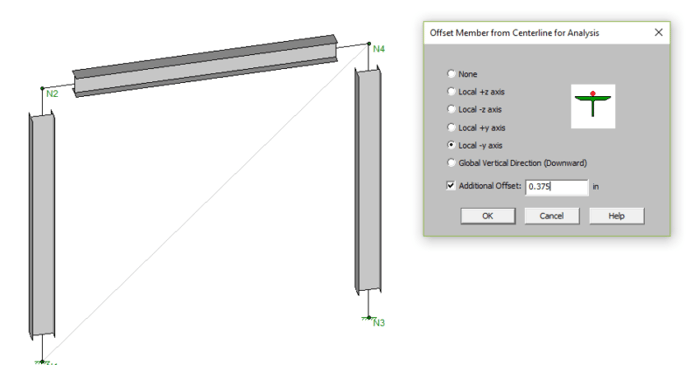
RISA-3D v15 includes "analysis offsets" which moves the centroid of the member for analysis allowing for flexibility in how members are designed. Let's use a WT brace to demonstrate how this feature can be utilized. When you model a WT brace it exists at the member centroid, which means that no...

Read More
Challenges when using Analysis Offsets
September 27, 2018

Challenges when using Analysis Offsets

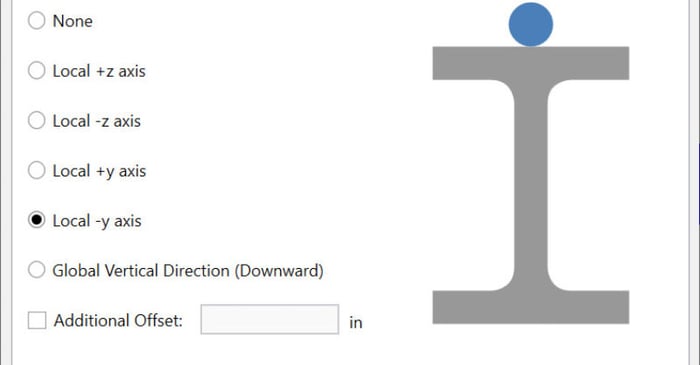
In a previous article we discussed how the Analysis Offsets feature in RISA-3D works and how it can be used to model members at top of steel. In this article, we will discuss some specific situations and how the results change with the analysis offset set as top of member (local -y axis).

Read More
Using Analysis Offsets in RISA-3D
September 27, 2018

Using Analysis Offsets in RISA-3D

Have you ever wondered what the Analysis Offset feature does? Let’s take a look at how this feature can be used to model members at top of steel.

Read More