


August 21, 2019
Enhanced Property Display and Modification
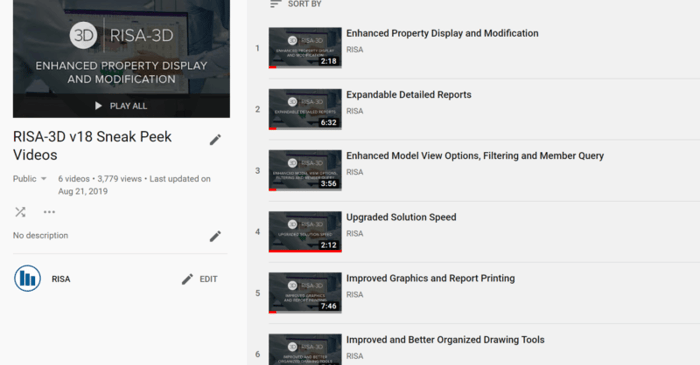
The new release of RISA-3D is right around the corner! Check out our teaser videos to enjoy a sneak peek at some of the most exciting new features!

Last week, RISA employees spend two days volunteering at the Second Harvest Food Bank of Orange County, CA. Both days were spent at the Food Distribution Center, where staff and volunteers worked together to sort, package and distribute enough food to feed 250,000 men, women and children each...
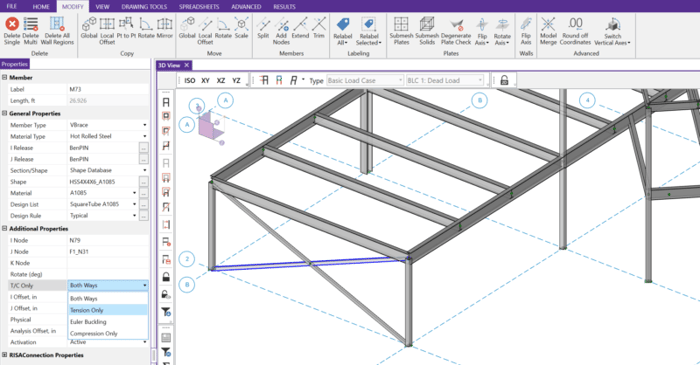
Tension or Compression (T/C) Only members are commonly used in steel buildings when modeling braced frames that resist lateral load.
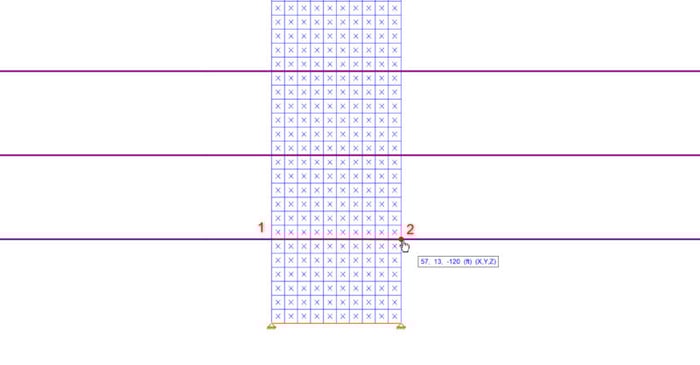
When modeling building structures using steel or composite steel floors, engineers typically utilize rigid diaphragms to distribute lateral loads (wind and seismic) to lateral load resisting elements such as shear walls, moment frames and braced frames. Rigid diaphragms represent a plane of very...
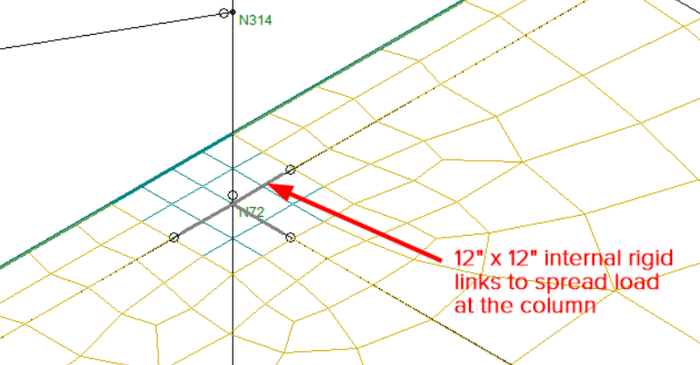
When using semi-rigid diaphragms in a RISAFloor/RISA-3D model, it is possible to see negative moments at the ends of pinned beams as a result of the link between the semi-rigid diaphragm and the beam-column connection.

RISA employees and their families recently participated in the 5th Annual Run4Water 5k at Mile Square Park where they raised over $6,400 towards the construction of wells that provide access to clean water to communities in Uganda. Congratulations to everyone involved and for more information about...
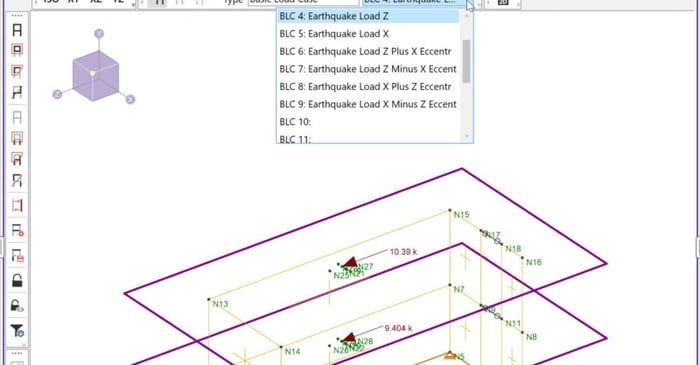
RISA-3D has two ways of automatically generating seismic-related Basic Load Categories (BLCs) which can be later referenced in the Load Combinations (LCs):

Connection design according to the new AISC 360-16 (15th Ed.) Steel Manual has now been implemented in RISAConnection. To select this code for your design, simply choose either LRFD or ASD from the Solution tab within the Global Project Settings. The addition of the new 15th Edition code, includes...