Tips & Tricks

December 29, 2025

What’s New for IBC 2024 in RISA: A Closer Look

With RISA’s latest release of RISA-3D v23.0.1, we’re continuing to expand support for IBC 2024, helping engineers stay aligned with the latest building code requirements as adoption accelerates across the U.S.—including federally funded projects. This release builds on v23.0.0 ASCE 7-22 enhancements and adds key material design updates that move RISA further into full IBC 2024 compliance. New Material Design Updates Supporting IBC 2024 The upcoming release introduces several important design code updates referenced by IBC 2024, including: Steel Seismic design per AISC 341-22 Prequalified connections per AISC 358-22 Continued support for AISC 360-22 (16th Edition) steel design Ongoing updates to the hot-rolled shape database, including compatibility with both 15th and 16th Edition steel manuals These updates support modern seismic detailing requirements and ensure consistency with current steel industry standards. Masonry Masonry design per TMS 402-22, aligning with the latest strength and serviceability provisions adopted by IBC 2024. Key updates include: Revisions to shear design equations, including clarified definitions of shear area as outlined in Table 4.4.5, improving consistency and transparency in shear capacity calculations. Updated strength reduction factors for flexure and combined flexure + axial. Unlike previous editions that used a fixed ϕ-factor of 0.9, TMS 402-22 introduces tension-controlled,…

Read More

How to verify loads graphically in RISAFloor
November 9, 2016

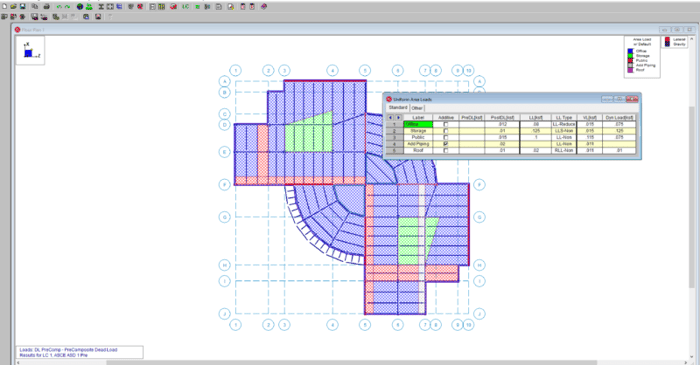
How to verify loads graphically in RISAFloor

RISAFloor does not record the applied area loads in a spreadsheet. To simplify modeling, it instead assumes a default area load over the entire diaphragm area. Additionally, you are free to apply area loads beyond the default loads. Whatever is drawn last will be considered the applied loading...
Read More
Instabilities in RISA-3D with Flexible Diaphragms
October 19, 2016

Instabilities in RISA-3D with Flexible Diaphragms

In a model that contains both RISAFloor and RISA-3D data it is possible to define your diaphragms as either flexible or rigid for lateral design. You can do this from the Diaphragms spreadsheet in either program:

Read More
Camber Design Rules in RISAFloor
July 12, 2016

Camber Design Rules in RISAFloor

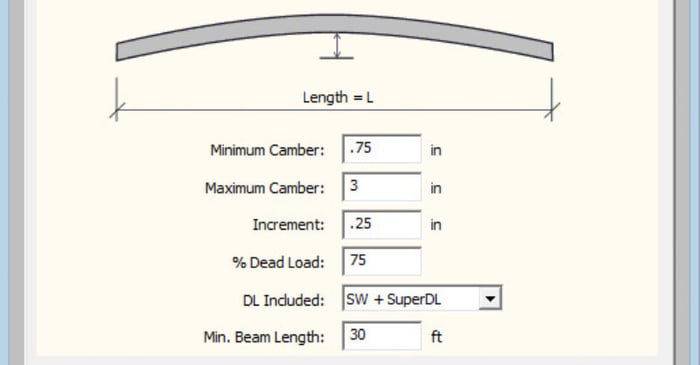
RISAFloor has the ability to assign camber design rules which allow the user more control over which members are cambered. A camber is the slight upward curvature of a steel beam which is used to compensate for deflection. A user can assign a camber directly to a member or set up design rules to...

Read More
Mechanically Graded Wood Design now Available
January 7, 2016

Mechanically Graded Wood Design now Available

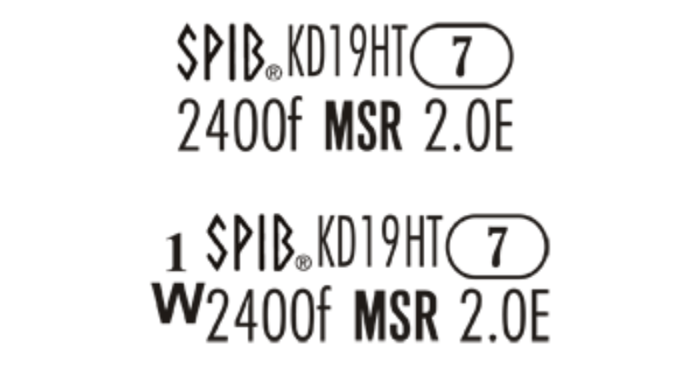
Mechanically graded wood materials have been added for the AWC NDS 2015 design code per Table 4C, and CSA O86-14 design code per tables 6.3.2 and 6.3.3. This specification includes the updated MEL and MSR design values.

Read More
Wood Design per AWC NDS 2015 Wood Code
December 22, 2015

Wood Design per AWC NDS 2015 Wood Code

The latest versions of RISA-3D and RISAFloor now incorporate the AWC NDS 2015. The new provisions have been implemented in RISA-3D v14.0 and RISAFloor v10.0 and can be utilized by selecting the AWC NDS-15: ASD from the Wood dropdown menu on the Codes tab of Model Settings.

Read More
How Do I Define Specific Member Sizes in RISAFloor?
November 10, 2015

How Do I Define Specific Member Sizes in RISAFloor?

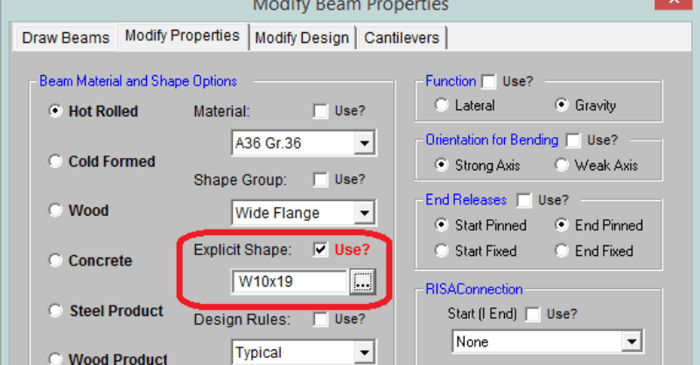
RISAFloor is a design program in which it takes basic shape criteria about your beam or column members and then selects an optimal size to meet strength and serviceability criteria. However, the program can just as easily perform a design check for an as-built condition by defining specific member...

Read More
Tolerance Between SP Joists vs. Normal Joists
October 28, 2015

Tolerance Between SP Joists vs. Normal Joists

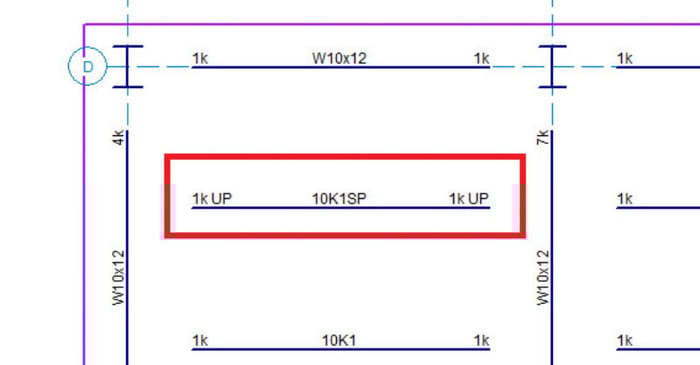
Have you been in RISAFloor performing a steel product design and noticed an (SP) extension to a joist designation? The following will discuss when the program designs for these special loading conditions.

Read More