



November 10, 2011
How Do You Define Additive Area Loads in RISAFloor?
RISAFloor uses the Area Load Definitions spreadsheet to define area loads available for use on a floor.
RISAFloor uses the Area Load Definitions spreadsheet to define area loads available for use on a floor.

One of the most overlooked design criteria for commercial buildings is the tendency of the floor system to bounce or vibrate due to human footfalls. Excessive vibration of the floor system is a serviceability issue, and can lead to annoyance or concern from the building’s occupants.
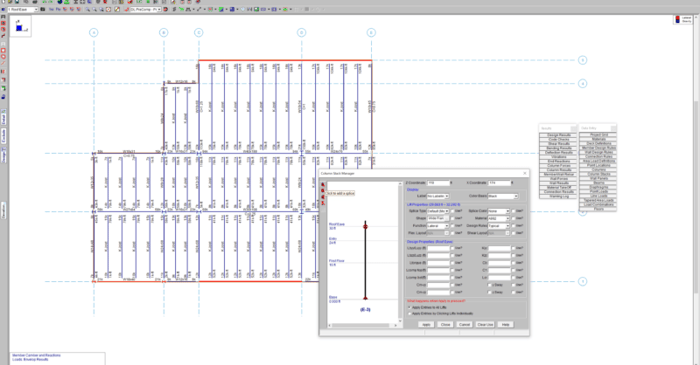
RISAFloor has the ability to model column splices for all columns. You have the choice of a Moment or Shear splice depending upon what type of forces you want the splice to transfer. There are a few different ways to define your splices that give you flexibility in assigning them to your columns.

There are several ways to take your RISA-3D or RISAFloor model to RISAConnection. The RISA-3D and RISAFloor end reactions can be sent directly to RISAConnection or RISAConnection can be operated from within RISAFloor and RISA-3D.
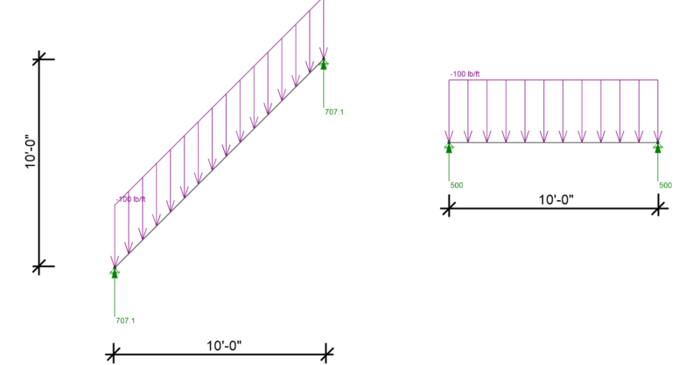
RISA-3D, RISA-2D and RISAFloor have the capability to project distributed and area loads onto members. Consider the case of snow load on two buildings: one with a flat roof and one with a sloped roof. Ignoring the concept of shedding, if both buildings have the same footprint then they should both...
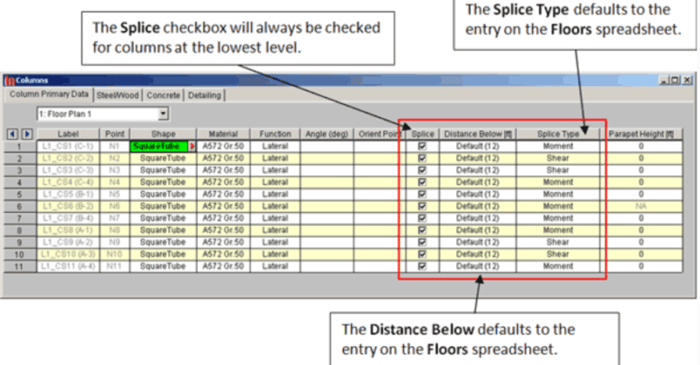
Column boundary conditions are set in RISAFloor per the Splice Type that you have set in the Columns spreadsheet. For any column at the lowest floor level, the Splice checkbox will automatically be checked, indicating that a boundary condition will be set at the base. You may set the boundary...

RISAFloor, RISA-3D, and RISAFoundation all allow the user to export a model as a DXF file for use in most major CAD programs.
In RISAFloor on the roof level, you layout only the top chords of the truss and create your slope. These top chords by themselves probably won’t be sufficient enough to get designed in RISAFloor, but, don’t worry, we’ll take care of that in RISA-3D when we model the rest of truss.
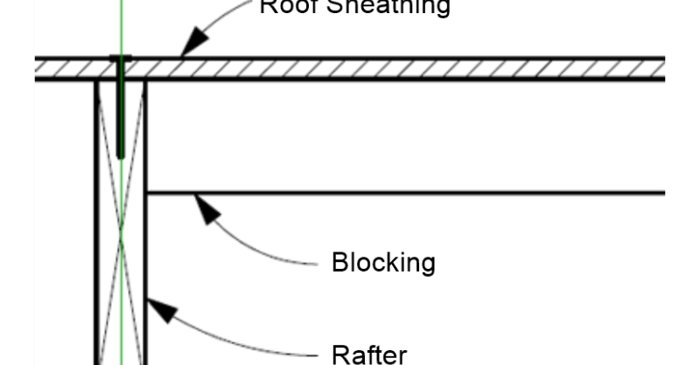
In RISAFloor, the beams are susceptible to two forms of buckling; Euler buckling and lateral-torsional buckling. The unbraced length is determined in RISAFloor using the deck properties and framing.