Tips & Tricks

December 29, 2025

What’s New for IBC 2024 in RISA: A Closer Look

With RISA’s latest release of RISA-3D v23.0.1, we’re continuing to expand support for IBC 2024, helping engineers stay aligned with the latest building code requirements as adoption accelerates across the U.S.—including federally funded projects. This release builds on v23.0.0 ASCE 7-22 enhancements and adds key material design updates that move RISA further into full IBC 2024 compliance. New Material Design Updates Supporting IBC 2024 The upcoming release introduces several important design code updates referenced by IBC 2024, including: Steel Seismic design per AISC 341-22 Prequalified connections per AISC 358-22 Continued support for AISC 360-22 (16th Edition) steel design Ongoing updates to the hot-rolled shape database, including compatibility with both 15th and 16th Edition steel manuals These updates support modern seismic detailing requirements and ensure consistency with current steel industry standards. Masonry Masonry design per TMS 402-22, aligning with the latest strength and serviceability provisions adopted by IBC 2024. Key updates include: Revisions to shear design equations, including clarified definitions of shear area as outlined in Table 4.4.5, improving consistency and transparency in shear capacity calculations. Updated strength reduction factors for flexure and combined flexure + axial. Unlike previous editions that used a fixed ϕ-factor of 0.9, TMS 402-22 introduces tension-controlled,…

Read More

Video: Using a DXF Underlay to Create Geometry in RISAFloor
March 3, 2021

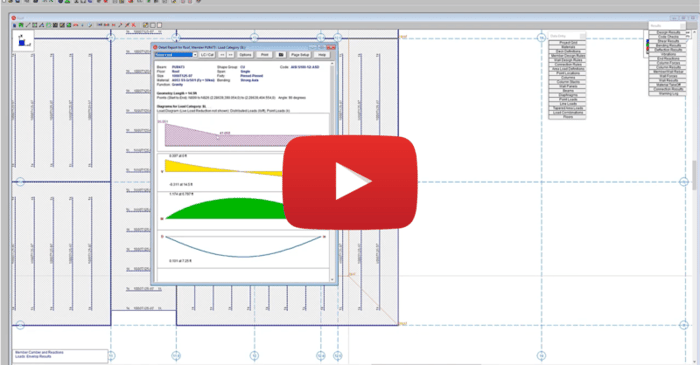
Video: Using a DXF Underlay to Create Geometry in RISAFloor

Oftentimes the architecture of a building does not follow a simple rectangular nor radial grid. A quick and easy way to handle these scenarios within RISAFloor is to import the building geometry or grid system as a DXF underlay.
Read More
Video: Using Various Diaphragm Types in RISAFloor
February 26, 2021

Video: Using Various Diaphragm Types in RISAFloor

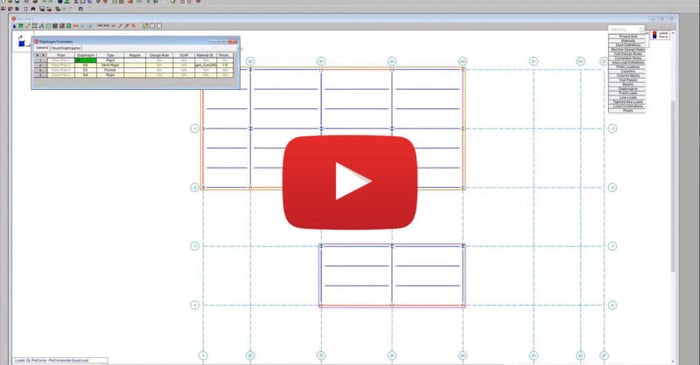
RISAFloor supports the three fundamental types of diaphragms used in structural analysis: rigid, semi-rigid and flexible. Watch this video to learn how to consider each of these diaphragm types within the same model and same floor plan.

Read More
Video: Applying Tapered Area Loads in RISAFloor
February 24, 2021

Video: Applying Tapered Area Loads in RISAFloor

RISAFloor enables you to consider the loads imposed on your structure due to the drifting effects of snow. Tapered area loads in RISAFloor are ideal for modeling this surcharge load due to snow drifting since the loading is approximated by a triangle.

Read More
Accidental Torsion for Semi-Rigid Diaphragms in RISAFloor
December 11, 2020

Accidental Torsion for Semi-Rigid Diaphragms in RISAFloor

The latest releases of RISAFloor (Version 15.0.1) and RISA-3D (Version 19.0.1) include consideration for accidental torsion and eccentric loading for semi-rigid diaphragms according to requirements outlined in ASCE 7, Section 12.8.4.2.

Read More
Exclude Results based on Selection in RISAFloor and RISAFoundation
October 30, 2020

Exclude Results based on Selection in RISAFloor and RISAFoundation

New to RISAFloor and RISAFoundation is the ability to exclude results by selection. Excluding results from your model is useful when there are certain elements whose results aren’t of interest to you. Removing this clutter from the results will enable you to concentrate on the elements you are most...

Read More
Cold Formed Steel Wall Design Now Available
October 30, 2020

Cold Formed Steel Wall Design Now Available

Cold-formed steel framing is a durable, reliable and cost-effective option for low-rise and mid-rise building projects. With the release of RISA-3D Version 19 and RISAFloor Version 15, cold formed steel (CFS) walls are now available for analysis and design. Walls that have been designated as...

Read More
Design of Back-to-Back CFS profiles now in RISAFloor
October 30, 2020

Design of Back-to-Back CFS profiles now in RISAFloor

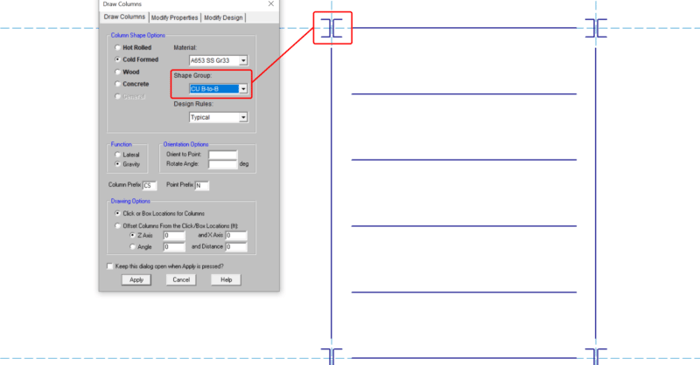
In many cases, cold-formed steel channels are built-up as back-to-back profiles in order to add strength and stability. Previously, these sections (along with face-to-face profiles) could be specified in RISAFloor, but unlike in RISA-3D could not be designed. RISAFloor v15 now includes the ability...

Read More
Composite Steel Joists in RISAFloor
October 30, 2020

Composite Steel Joists in RISAFloor

RISAFloor now includes the ability for engineers to model with and design CJ-Series composite steel joists according to SJI 200-2015 and including the design of top/bottom chords, bridging, joist seat depth as well as headed stud size and spacing.

Read More