Tips & Tricks

December 29, 2025

What’s New for IBC 2024 in RISA: A Closer Look

With RISA’s latest release of RISA-3D v23.0.1, we’re continuing to expand support for IBC 2024, helping engineers stay aligned with the latest building code requirements as adoption accelerates across the U.S.—including federally funded projects. This release builds on v23.0.0 ASCE 7-22 enhancements and adds key material design updates that move RISA further into full IBC 2024 compliance. New Material Design Updates Supporting IBC 2024 The upcoming release introduces several important design code updates referenced by IBC 2024, including: Steel Seismic design per AISC 341-22 Prequalified connections per AISC 358-22 Continued support for AISC 360-22 (16th Edition) steel design Ongoing updates to the hot-rolled shape database, including compatibility with both 15th and 16th Edition steel manuals These updates support modern seismic detailing requirements and ensure consistency with current steel industry standards. Masonry Masonry design per TMS 402-22, aligning with the latest strength and serviceability provisions adopted by IBC 2024. Key updates include: Revisions to shear design equations, including clarified definitions of shear area as outlined in Table 4.4.5, improving consistency and transparency in shear capacity calculations. Updated strength reduction factors for flexure and combined flexure + axial. Unlike previous editions that used a fixed ϕ-factor of 0.9, TMS 402-22 introduces tension-controlled,…

Read More

Nesting Load Combinations
March 27, 2013

Nesting Load Combinations

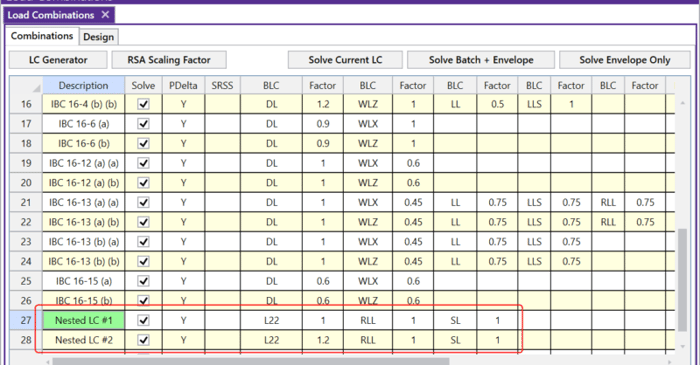
The Load Combinations spreadsheet in RISA-3D is limited to ten columns of BLC and Factor combinations. However, there are times where you may need to include additional entries to your Load Combination. To do this, you can simply “nest” your load combinations.

Read More
How to Model Multiple Pedestals/Loads on One Footing
August 31, 2012

How to Model Multiple Pedestals/Loads on One Footing

RISAFoundation includes a footing element which is represented by a single node. A frequent question that arises is how to apply multiple point loads to a single footing, but at different locations. This can be done with or without corresponding pedestals, but for the example below multiple...

Read More
How to Apply Hydrostatic Loads to Circular Tanks in RISA-3D
June 7, 2012

How to Apply Hydrostatic Loads to Circular Tanks in RISA-3D

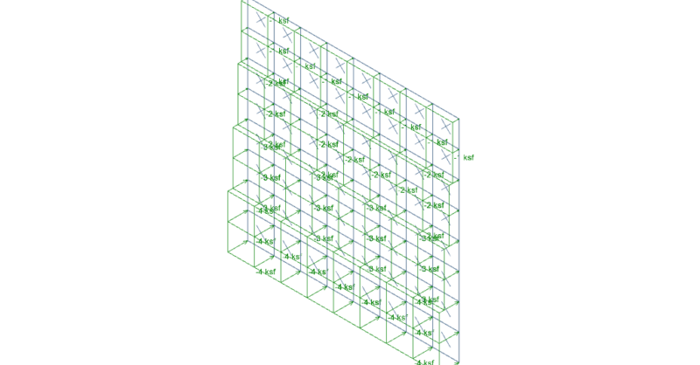
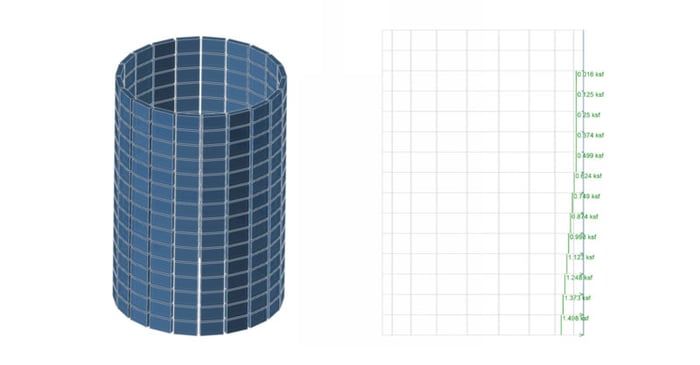
RISA-3D v10 now has the ability to quickly and easily apply hydrostatic loads to circular tanks using the Cylinder Generator. This generator can be found by clicking the Templates button and choosing the Cylinder - Plates/Members option.

Read More
How to Check Floor Vibrations Using RISAFloor
October 13, 2011

How to Check Floor Vibrations Using RISAFloor

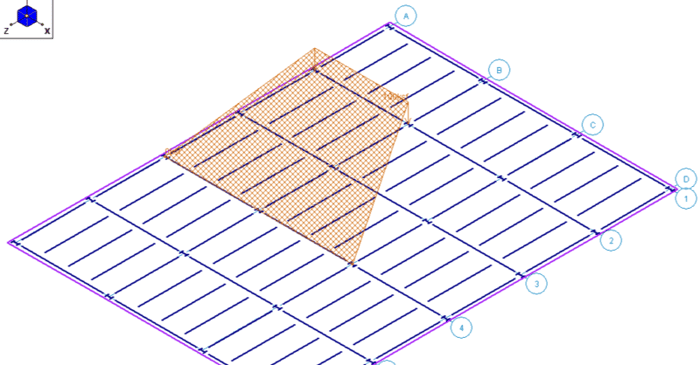
One of the most overlooked design criteria for commercial buildings is the tendency of the floor system to bounce or vibrate due to human footfalls. Excessive vibration of the floor system is a serviceability issue, and can lead to annoyance or concern from the building’s occupants.

Read More
Using Projected Loads in RISA-3D
August 18, 2011

Using Projected Loads in RISA-3D

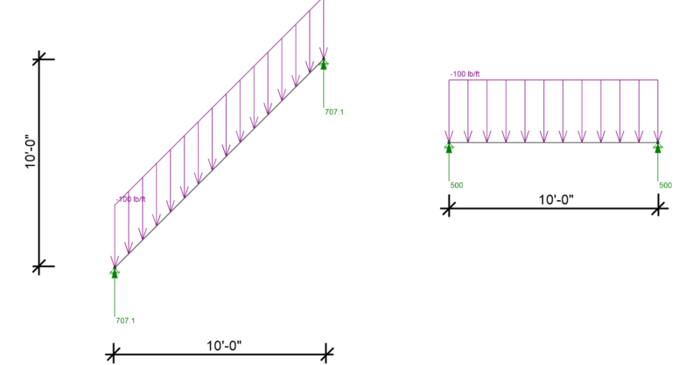
RISA-3D, RISA-2D and RISAFloor have the capability to project distributed and area loads onto members. Consider the case of snow load on two buildings: one with a flat roof and one with a sloped roof. Ignoring the concept of shedding, if both buildings have the same footprint then they should both...

Read More
How to Apply Notional Loads in RISA-3D
May 23, 2011

How to Apply Notional Loads in RISA-3D

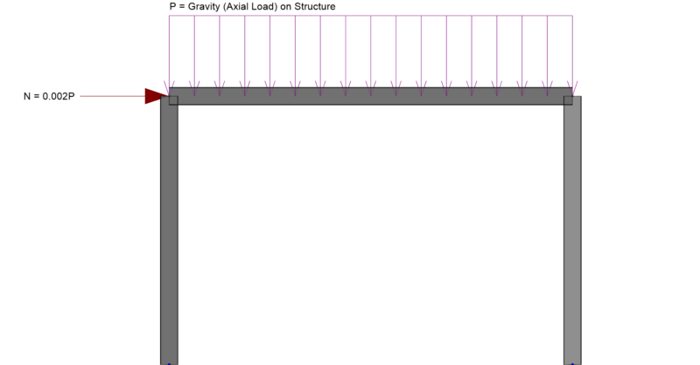
In RISA-3D you can automatically apply notional loads to your structure to comply with your steel code (such as AISC 360). Notional loads take into account a building’s actual out-of-plumbness by adding de-stabilizing lateral loads. The AISC 360 recommends either 0.2% or 0.3% of the vertical loads...

Read More