


April 20, 2011
Refining Area Load Distribution in RISA-3D
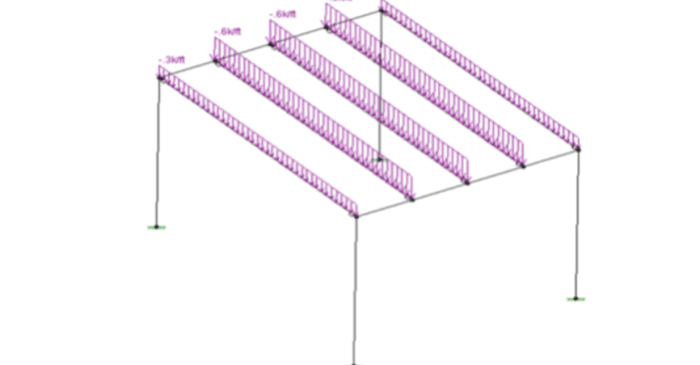
After solving a model with Member Area Loads, RISA-3D will automatically create Transient Basic Load Cases that allow the user to verify load distribution.
After solving a model with Member Area Loads, RISA-3D will automatically create Transient Basic Load Cases that allow the user to verify load distribution.
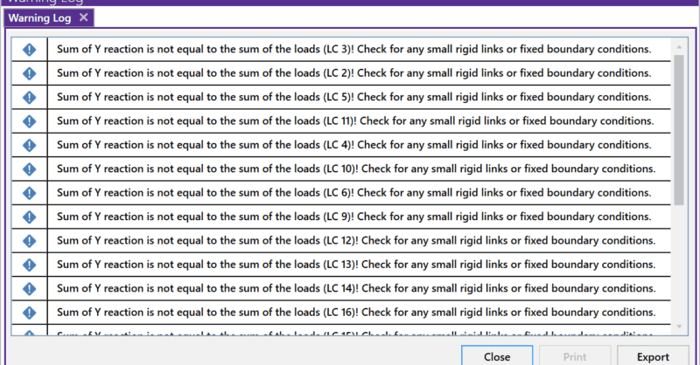
RISA-3D will now check your model for errors by summing the reactions in your model and comparing them to the applied loads. This occurs for the global X, Y, and Z directions. If RISA identifies that the reactions do not equal the applied loads then the software will show a warning message to the...

V-Brace frames in RISA-3D seismic design have unbalanced forces shown on both the beams and braces. As brace frames displace under lateral loads, one brace will buckle and its force decreases while the other brace in tension will have an increase of force until it reaches yield.
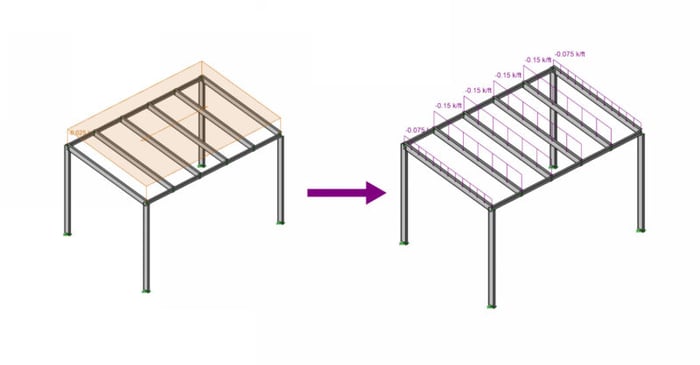
When a model is solved that contains Member Area Loads, the program automatically attributes them to the applicable members within the defined area of the applied load. The load is attributed to the members as distributed loads that RISA-3D defines as Transient Loads.

RISA-3D now has the ability to define the seismic parameters Rho, Omega and SDS directly into load combinations. If you open the Basic Load Cases spreadsheet and click into the BLC column, the dialog offers the ability to add these values in to factor the load.

Applying seismic loads to structures with rigid diaphragms can be done automatically in RISA-3D. In the image below we have a structure that has rigid diaphragms and the seismic load has already been applied at each diaphragm level.
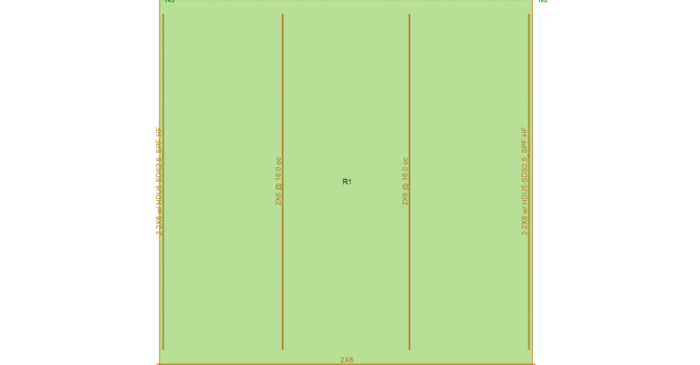
Continuous tiedown systems are used to help resist overturning forces generated by lateral loads, and can be estimated in RISA-3D using the hold-down database and the strap forces.
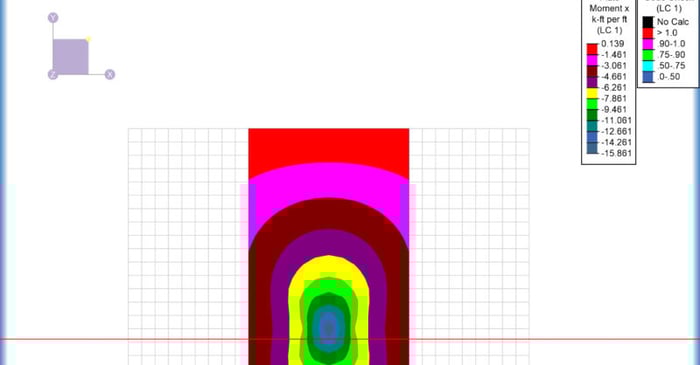
When you have a plate model for a slab or wall in RISA-3D, the Internal Force Summation Tool (IFST) is a very useful analysis tool to get exactly the forces that you want to design for. To use the tool, you must:
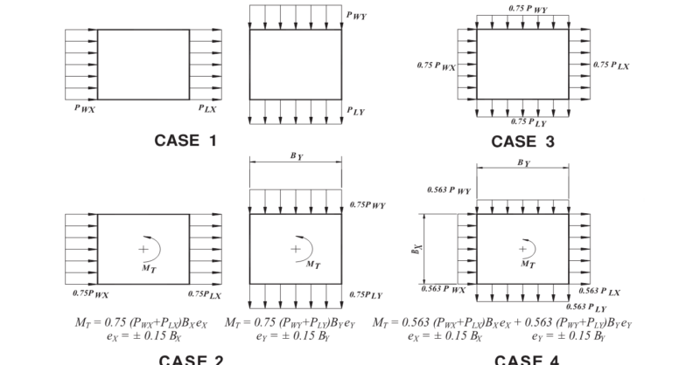
RISA-3D automatically considers the complex wind combinations required by ASCE 7 using the wind load generator and the load combination generator.