


June 5, 2012
How to Account for Axial Loads in your RISAConnection Designs
With the new RISAConnection version 2.0, users now have the ability to design all connections for axial forces as well as the shear and moment forces.
With the new RISAConnection version 2.0, users now have the ability to design all connections for axial forces as well as the shear and moment forces.
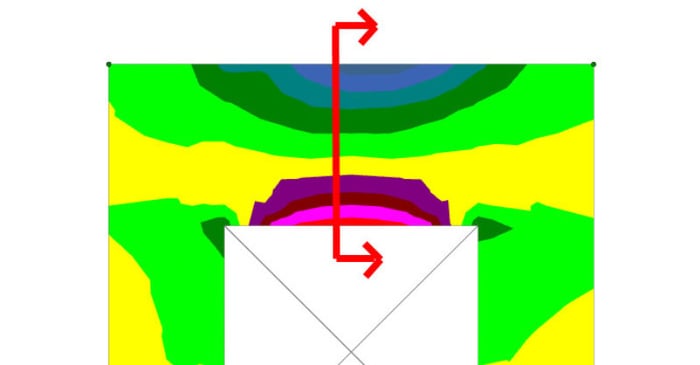
RISA-3D now has the ability to design concrete walls with openings for both in-plane and out of plane loading. For lintels we provide analysis results based on the finite element results of the region above the opening.

The applied loads in a response spectrum analysis (RSA) are the applied masses times the accelerations in the response spectra. Each mode of vibration produces its own set of joint reactions. The reactions for each mode obey statics as shown in the portal frame example shown below: Response...
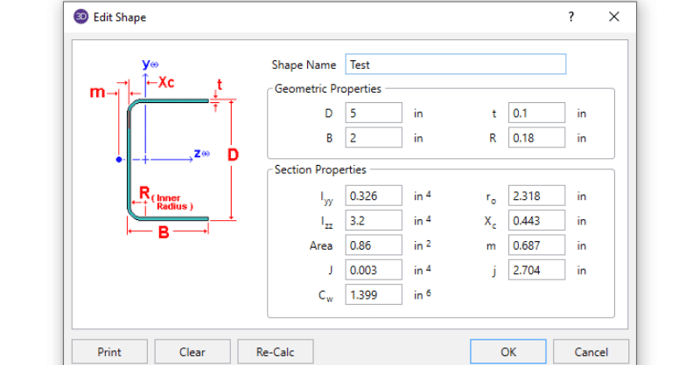
In order to get code calculations, RISA-3D and RISA-2D need to know what type of shape would be most similar to yours. This is because the program needs to use the correct code equations for your shape type.

Investigating P-Delta instabilities in RISA-3D (or RISA-2D) can be difficult. The first step is usually to solve the model without the P-Delta effect included to see if there are any obvious deflection problems that could cause issues with a P-Delta analysis. But, what can be done when this doesn’t...
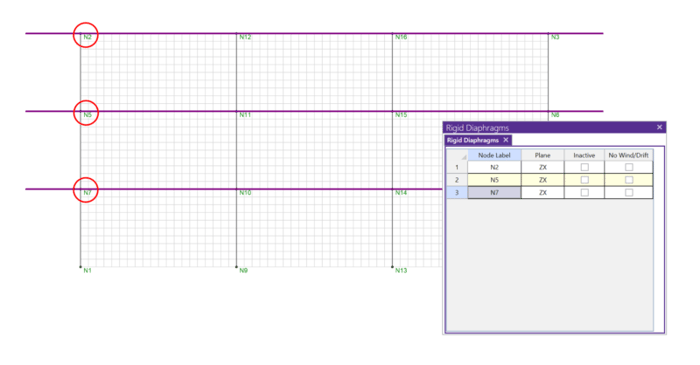
In RISA-3D, rigid diaphragms can be added using the Diaphragm spreadsheet. Just enter the node label and then choose the horizontal plane. Internally, all rigid diaphragms are membrane diaphragms that tie all of the nodes within the diaphragm plane together for both translation and rotation, but...
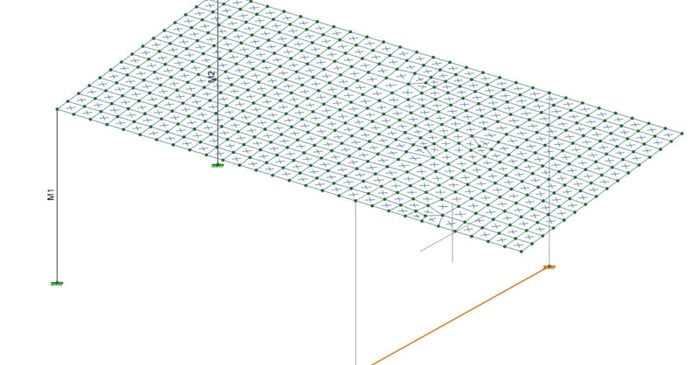
Below is a model of a concrete flat slab (represented by a plate) which is bearing on two columns and a skewed wall. As we know from plate meshing we will obviously have to submesh this slab in order to get accurate results. However if we do an ordinary submesh (as shown below) the plates will not...
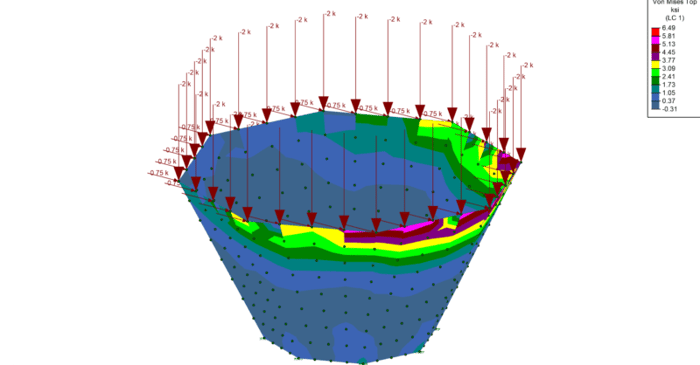
Aside from the topic of plate connectivity, the concept of plate meshing is equally important to the analysis of structures using finite elements (plates).
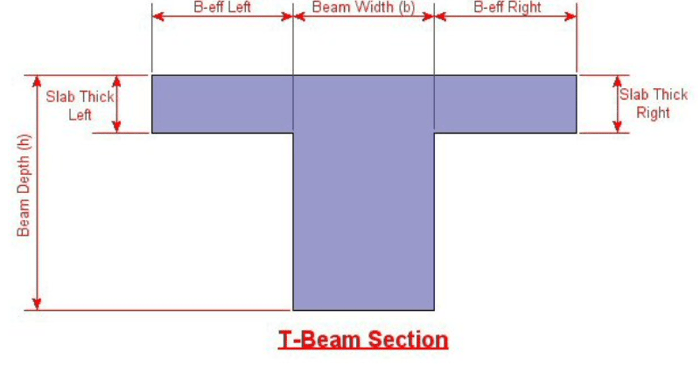
Modeling T-beams and L-beams in RISA-3D can easily be done by specifying the flanges after drawing in the rectangular concrete beam. The flange properties can be specified for individual members on the Concrete Beam tab of the Members spreadsheet, or for a group of selected members in the...