


February 1, 2011
What is a “Default Deck” in RISAFloor?
To understand decks it is important to know what a deck is. In typical buildings, most of each floor will consist of only one type of deck.
To understand decks it is important to know what a deck is. In typical buildings, most of each floor will consist of only one type of deck.
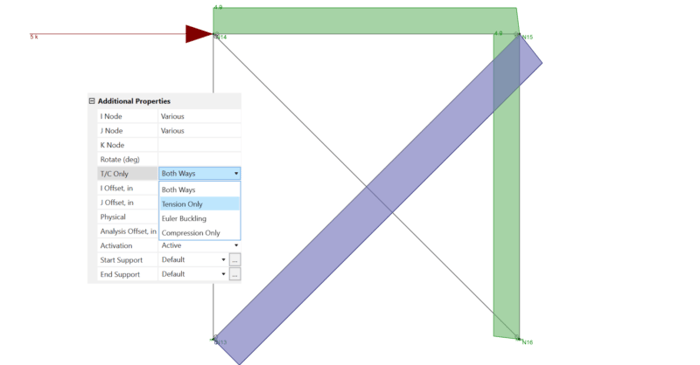
Before reading this, be sure to check out the article linked below on X-Bracing. In RISA-3D, you can set a member to be tension-only by selecting it and selecting Tension Only or Euler Buckling from the Additional Properties section of the Member Properties.
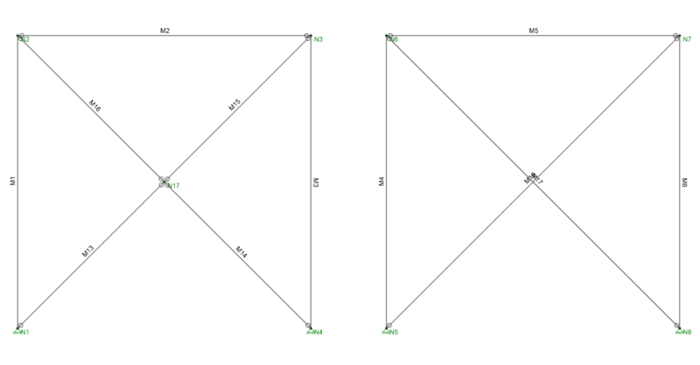
There are several tips to modeling X-Bracing within RISA-3D that can help the model solve faster and give you better results.
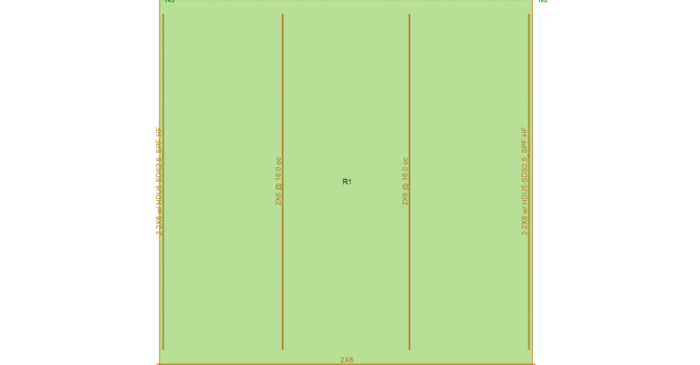
Continuous tiedown systems are used to help resist overturning forces generated by lateral loads, and can be estimated in RISA-3D using the hold-down database and the strap forces.
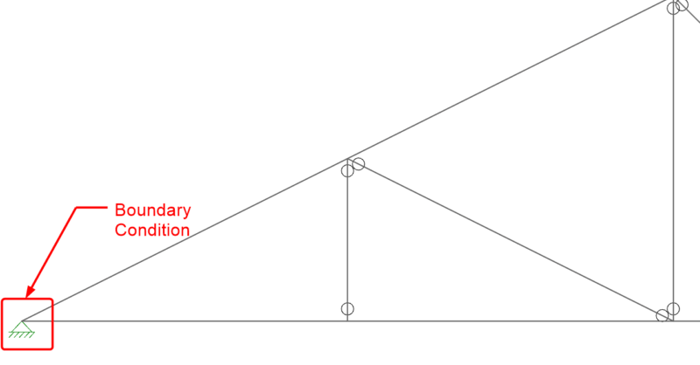
When it comes to trusses in RISA-3D, boundary condition definitions (pin vs. roller) can make a huge difference. Let’s take an example of a typical roof truss. Note that a pin-pin boundary condition has been applied to the ends.
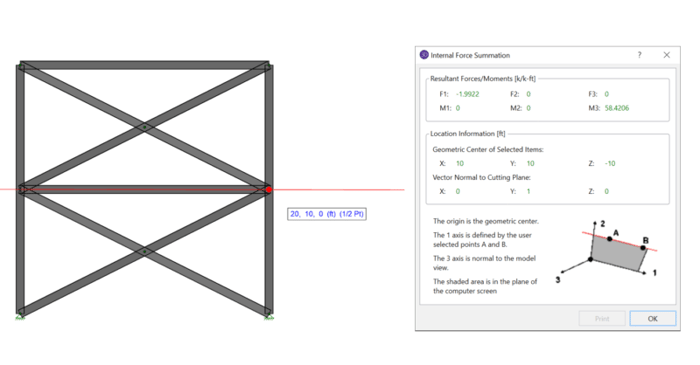
When using rigid diaphragm analysis in RISA-3D it can be useful to evaluate the story shear in each frame. This is a perfect application for the Internal Force Summation Tool. The first step is to solve the desired load combination.
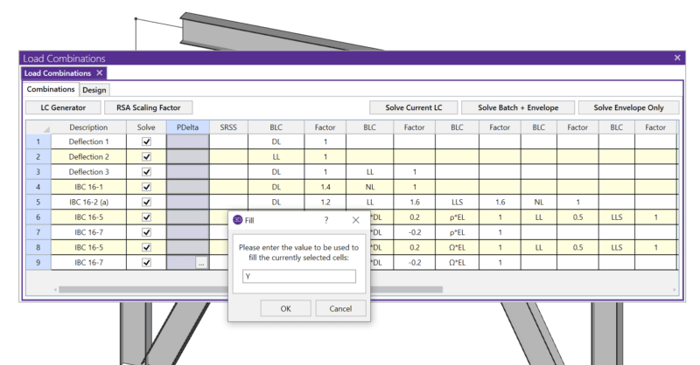
RISA includes various advanced spreadsheet operations that make reviewing input and results easy.
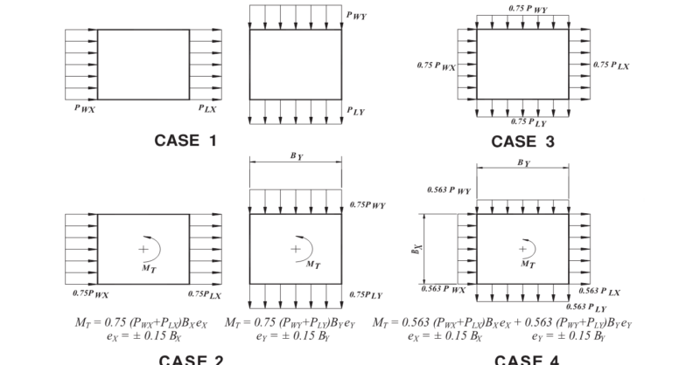
RISA-3D automatically considers the complex wind combinations required by ASCE 7 using the wind load generator and the load combination generator.
When you model your building in RISAFloor, make sure that you define your slab edge as flexible. That will ensure that the entire contents of the diaphragm will use flexible behavior.