



September 14, 2010
How to Model a Building on a Hill
When dealing with a sloping site, it is often necessary to step-down the bases of columns and walls along the length of a building. The example below illustrates how to model this in RISAFloor.
When dealing with a sloping site, it is often necessary to step-down the bases of columns and walls along the length of a building. The example below illustrates how to model this in RISAFloor.

RISAFloor is capable of automatically generating the wind loads on sloped roofs. Let’s look at an example of this with the model below:

The Dyn Load represents the additional load that must be included in the calculation of the total seismic weight.

RISAFloor has the capability to design wood I-Joists based on tables provided by the manufacturer, or provided by you. When modeling beams in RISAFloor, choose the Wood Product material, and choose a joist manufacturer from the shape group.
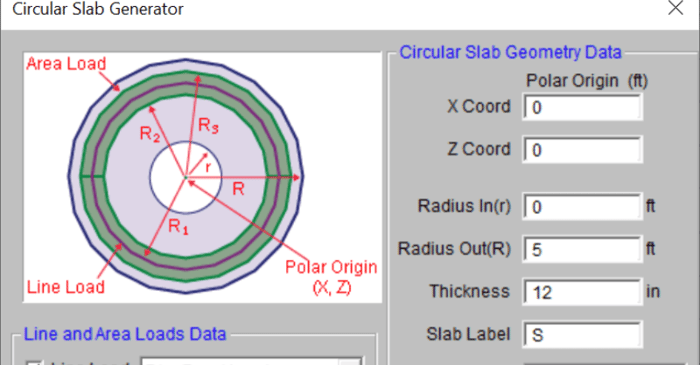
RISAFoundation now has the ability to automatically generate a circular slab with just a few easy clicks. Using the generator the program will create the mat slab and tank loading all in one easy step. Go to the Insert menu and select "Circular Foundation".
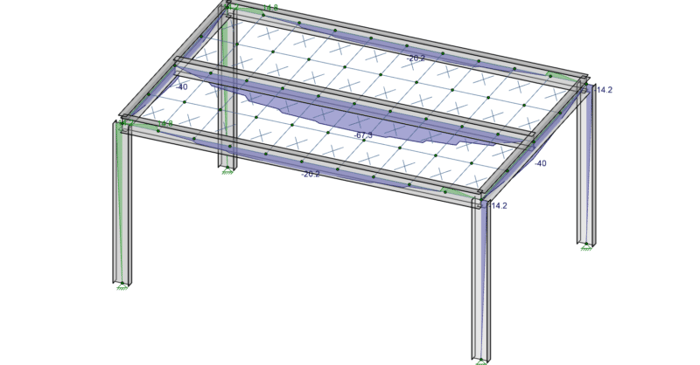
In order to understand the interaction between plates and members it is important that you know the basics of Physical Members and Plate Connectivity. Remember that plates only connect to other elements at their corners, and you will instantly recognize why the model below will not work as intended.
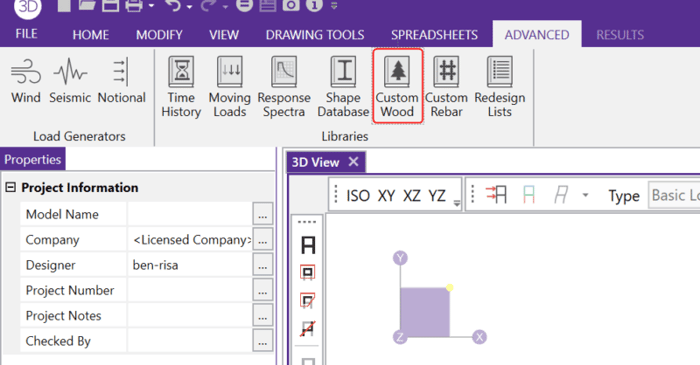
In RISA-3D and RISAFloor, the entire NDS species list is available as well as glulam materials but you may need to design a wood product that is not available in the program.
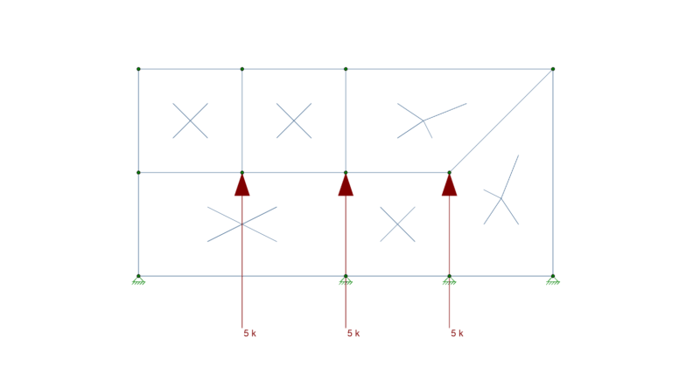
To best understand how plates interact with each other you must first understand the concept of Physical Members. The important thing to keep in mind is that plates are not physical members. A plate is defined using either three or four joints, and it only connects to other plates at those joints....
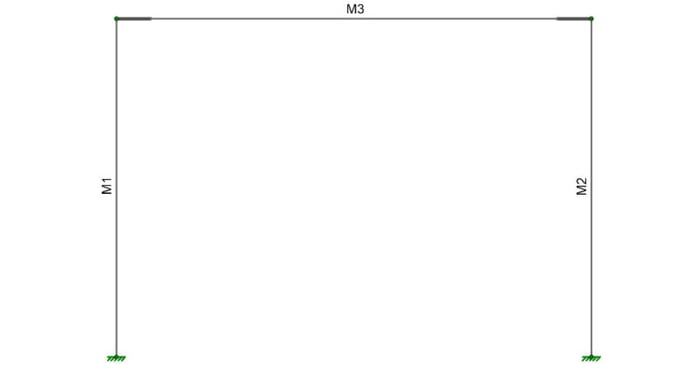
When you have a deep column, it is necessary to model the beam so that it connects to the face of the column. This results in an eccentricity at the joint. RISA-3D offers two ways to model this eccentricity.