How do Plates and Walls interact with each other?
Below is a model of a concrete flat slab (represented by a plate) which is bearing on two columns and a skewed wall. As we know from plate meshing we...

Steel
Wood
Concrete
Education
RISA-3D
RISAFloor
RISAConnection
ADAPT-Builder
RISACalc
RISAFoundation
ADAPT-PT/RC
RISASection
RISA-2D
ADAPT-Felt
Link Utilities
![]()
Try the Complete RISA Suite for
10 Days FREE

Training
Webinars
Reach an Engineer
Tips & Tricks
Design Codes
Case Studies
New Features
Cloud Licensing

RISA Education
Video Library
Downloads
Licensing Support
Customer Portal
Product Documentation
System Requirements
Specifications
Online Help
Get Support
Contact
Careers
Employee Spotlight
Nemetschek
License Agreement
Privacy Policy
Open BIM
Partners

About Us
Halloween isn’t just for candy and costumes—it’s the perfect time to test your spooky engineering skills! We’ve brewed up a Halloween-themed RISA Jeopardy game, packed with fun, easy questions about our software. Tip for readers: Try to answer before revealing the “treat” below each question! 💀 Can You Count? 100 – RISACalc: How many components are currently available in RISACalc? 10 (Beam, Column, Steel Joist, Composite Beam, Retaining Wall, Spread Footing, Wall Footing, Drilled Pier, Seismic Load, Wind Load) 200 – FD: How many Data Entry spreadsheets are available in RISAFoundation? 25 300 – RISA-3D: How many countries or regions have building codes supported in RISA-3D? 9 (US, Canada, Mexico, Europe, Great Britain, India, Australia, New Zealand, Saudi Arabia) 🎃 Adaptable 100 – ADAPT: Which of these is not an ADAPT product? ADAPT-Builder, ADAPT-Felt, ADAPT-Floor, ADAPT-ABI ADAPT-Floor 200 – ADAPT: Which mode of ADAPT-Builder is used to design slabs-on-grade on expansive soils using the PTI method? ADAPT-SOG 🕸️ The Whole Family 100 – Other: This steel detailing software and fellow Nemetschek brand has a built-in export option in RISA-3D. SDS2 200 – Other: Which design code is the most common in our software, found in 8 of our 10 programs?…
Read More
Below is a model of a concrete flat slab (represented by a plate) which is bearing on two columns and a skewed wall. As we know from plate meshing we...
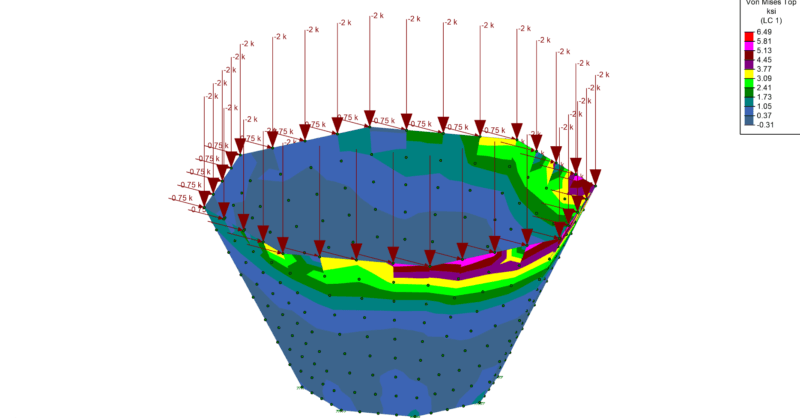
Aside from the topic of plate connectivity, the concept of plate meshing is equally important to the analysis of structures using finite elements...
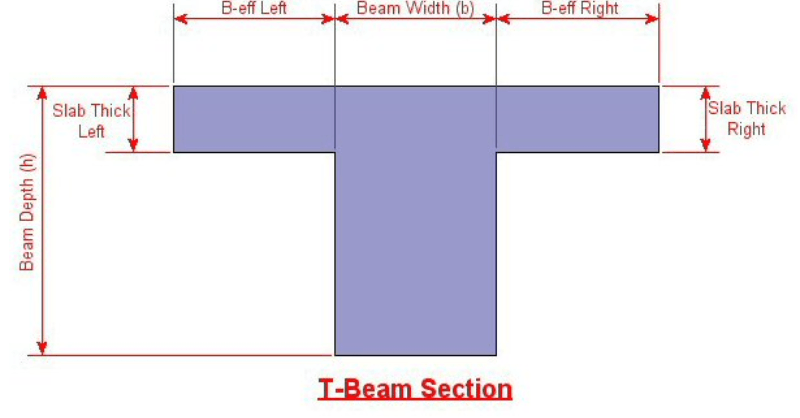
Modeling T-beams and L-beams in RISA-3D can easily be done by specifying the flanges after drawing in the rectangular concrete beam. The flange...
If you want to assign joists in a framing bay with an exact spacing RISAFloor will allow you to specify which side of the bay you want the program to...
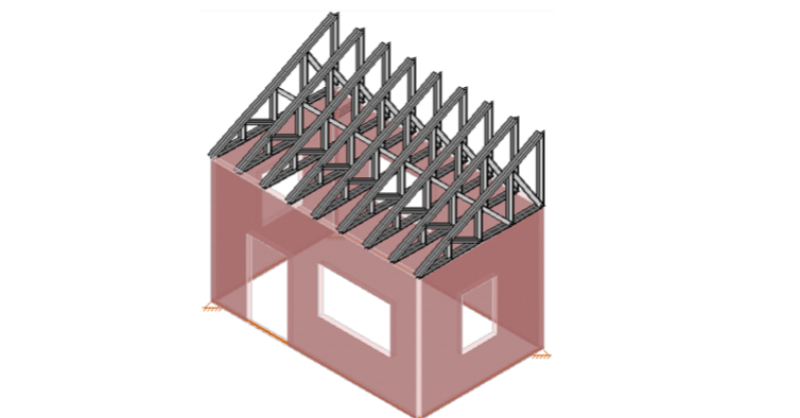
RISA-3D allows you to append, or merge, multiple models into a single model file. This may be helpful if you model single floors in separate files...
RISAFloor has the ability to apply tapered snow loads on your building’s roof to simulate drift snow loads.
RISAFloor uses the Area Load Definitions spreadsheet to define area loads available for use on a floor.
One of the most overlooked design criteria for commercial buildings is the tendency of the floor system to bounce or vibrate due to human footfalls....
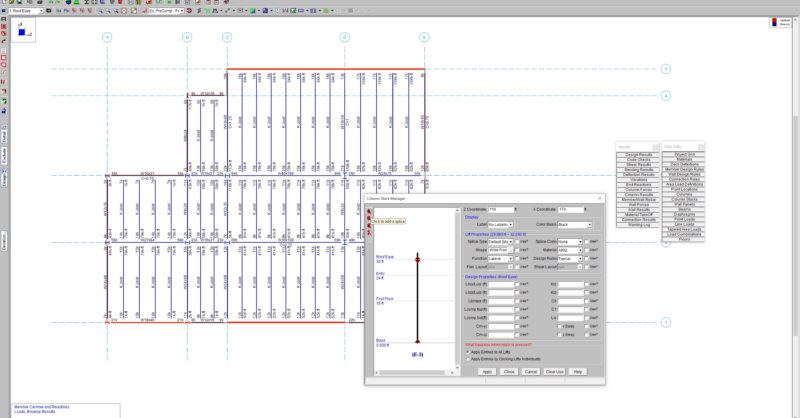
RISAFloor has the ability to model column splices for all columns. You have the choice of a Moment or Shear splice depending upon what type of forces...
Our monthly "Structural Moment" newsletter is the best way to keep up with RISA’s product updates, new releases, new features, training events, webinars and more...