Tips & Tricks

December 29, 2025

What’s New for IBC 2024 in RISA: A Closer Look

With RISA’s latest release of RISA-3D v23.0.1, we’re continuing to expand support for IBC 2024, helping engineers stay aligned with the latest building code requirements as adoption accelerates across the U.S.—including federally funded projects. This release builds on v23.0.0 ASCE 7-22 enhancements and adds key material design updates that move RISA further into full IBC 2024 compliance. New Material Design Updates Supporting IBC 2024 The upcoming release introduces several important design code updates referenced by IBC 2024, including: Steel Seismic design per AISC 341-22 Prequalified connections per AISC 358-22 Continued support for AISC 360-22 (16th Edition) steel design Ongoing updates to the hot-rolled shape database, including compatibility with both 15th and 16th Edition steel manuals These updates support modern seismic detailing requirements and ensure consistency with current steel industry standards. Masonry Masonry design per TMS 402-22, aligning with the latest strength and serviceability provisions adopted by IBC 2024. Key updates include: Revisions to shear design equations, including clarified definitions of shear area as outlined in Table 4.4.5, improving consistency and transparency in shear capacity calculations. Updated strength reduction factors for flexure and combined flexure + axial. Unlike previous editions that used a fixed ϕ-factor of 0.9, TMS 402-22 introduces tension-controlled,…

Read More

How Do I Model a Tapered Pipe?
December 30, 2013

How Do I Model a Tapered Pipe?

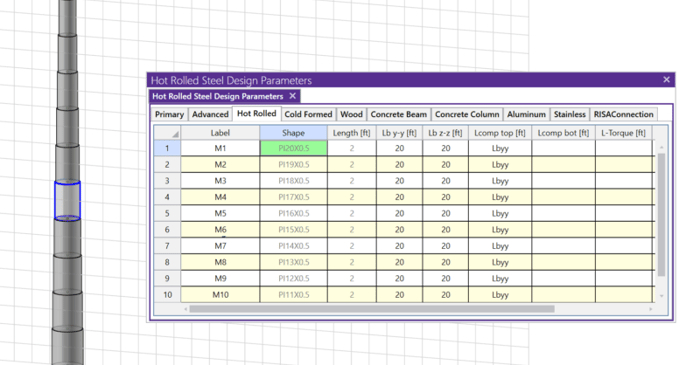
Tapered members are common for metal buildings and pole-type structures. For tapered wide flange members RISA provides a quick way to generate a tapered section that can then be checked per the provisions of AISC Design Guide 25 on tapered wide flanges.

Read More
What are Web Doubler plates used for in RISAConnection?
December 27, 2013

What are Web Doubler plates used for in RISAConnection?

For moment connections in RISAConnection there is an option to place web doubler plates on the column web. These plates act as a reinforcement for the column web to prevent panel zone shear failure. As shown below, when the flanges of a beam in a moment connection connect to a column they form a...

Read More
Why Is My Beam Failing in Shear?
November 20, 2013

Why Is My Beam Failing in Shear?

When solving a RISA-3D model you may find you have a Shear UC (unity check) much higher than expected from bending shear alone. If you open the detail report and compare the shear demand to the shear capacity you may see that the demand/capacity is less than the Max Shear Check reported.

Read More
What is the Tau b Factor and how does it affect my analysis?
October 9, 2013

What is the Tau b Factor and how does it affect my analysis?

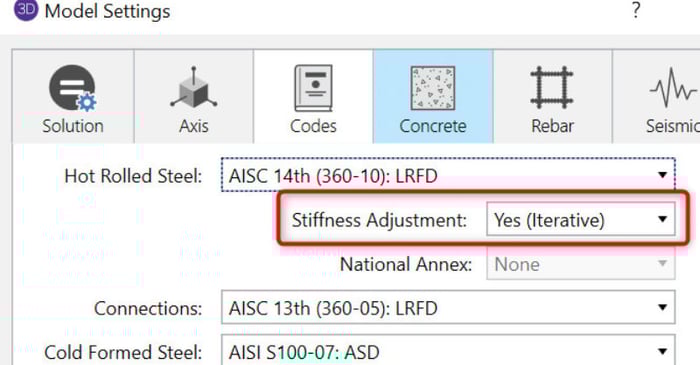
When solving a RISA-3D model with hot rolled steel members under the AISC 360-05 (13th Edition) or AISC 360-10 (14th Edition) codes you may find references to a factor called Tau_b. To understand what this factor is you should first be familiar with the Stiffness Adjustment in RISA-3D, then see the...

Read More
Why Are The Steel Beam Deflections So Large?
September 6, 2013

Why Are The Steel Beam Deflections So Large?

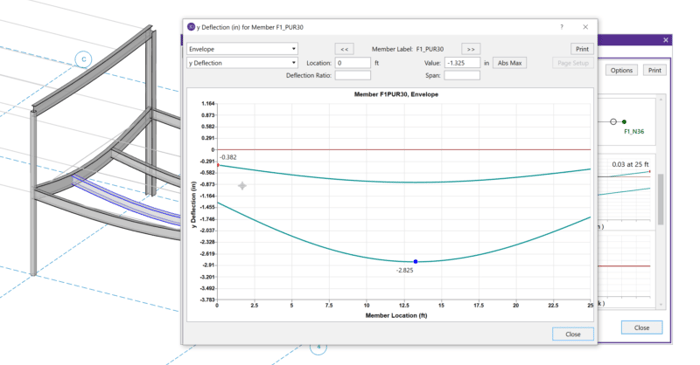
When solving a RISA-3D model with hot rolled steel members under the AISC 360-05 (13th Edition), AISC 360-10 (14th Edition) or AISC 360-16 (15th Edition) codes you may find that your member deflections are roughly 20% larger than you would expect. To understand why see the AISC 360-10...

Read More
How can I transition a Plate Mesh from Round to Rectangular?
August 21, 2013

How can I transition a Plate Mesh from Round to Rectangular?

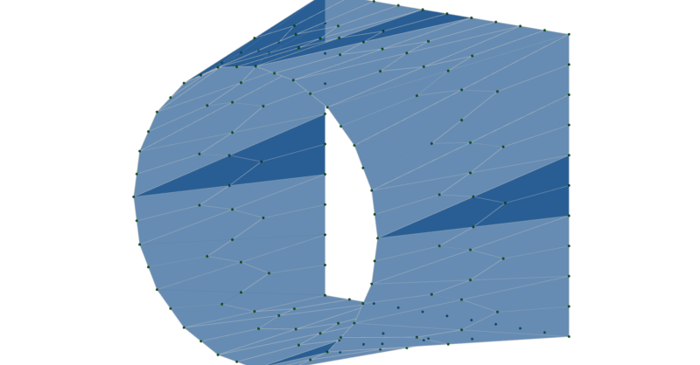
Transitioning plates from a circular (or elliptical) to a square (or rectangular) shape can be done easily using some of RISA-3D’s automated generation tools. Below is the procedure for transitioning a circle into a square, but it should be clear how this could be accomplished for other similar...

Read More
How to Use International Shapes in RISAConnection
August 14, 2013

How to Use International Shapes in RISAConnection

You can use the full library of international shapes inside of RISAConnection. Currently RISAConnection uses the American steel code AISC code for design checks; however you can customize your connection to use any of the International shapes available in the database.

Read More
How to View Wood Design Values
July 31, 2013

How to View Wood Design Values

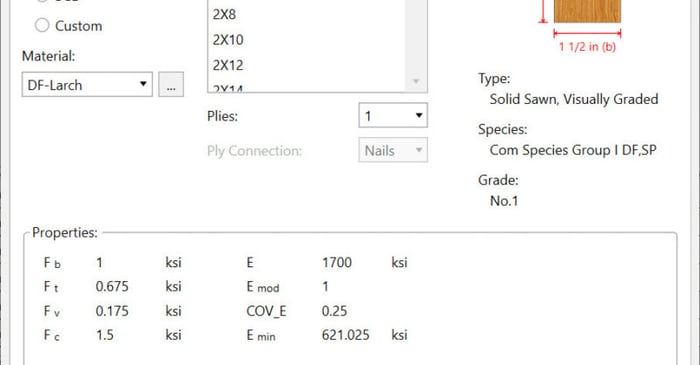
We have recently added a new View Design Properties dialog to allow you to now have the ability to easily view the wood design values prior to solution.

Read More
How to use Live Load Special
July 2, 2013

How to use Live Load Special

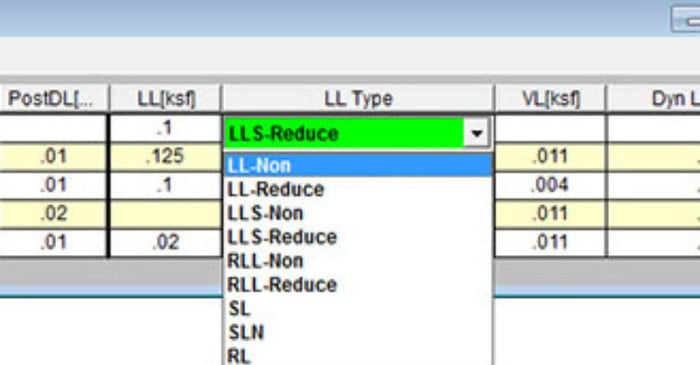
In RISAFloor, there are several different Load Categories that define Live Load. The IBC and the ASCE7 both have provisions that allow you to reduce the tributary area of the Live Loads. These codes have equations that adjust the Live load based on the tributary area and usage (KLL*AT). In...

Read More